
There is a version of this country most visitors never meet, and you get it in the cold months. Japan in winter hands you deep snow in the north, clear skies over Fuji, and temples with nobody in front of them.

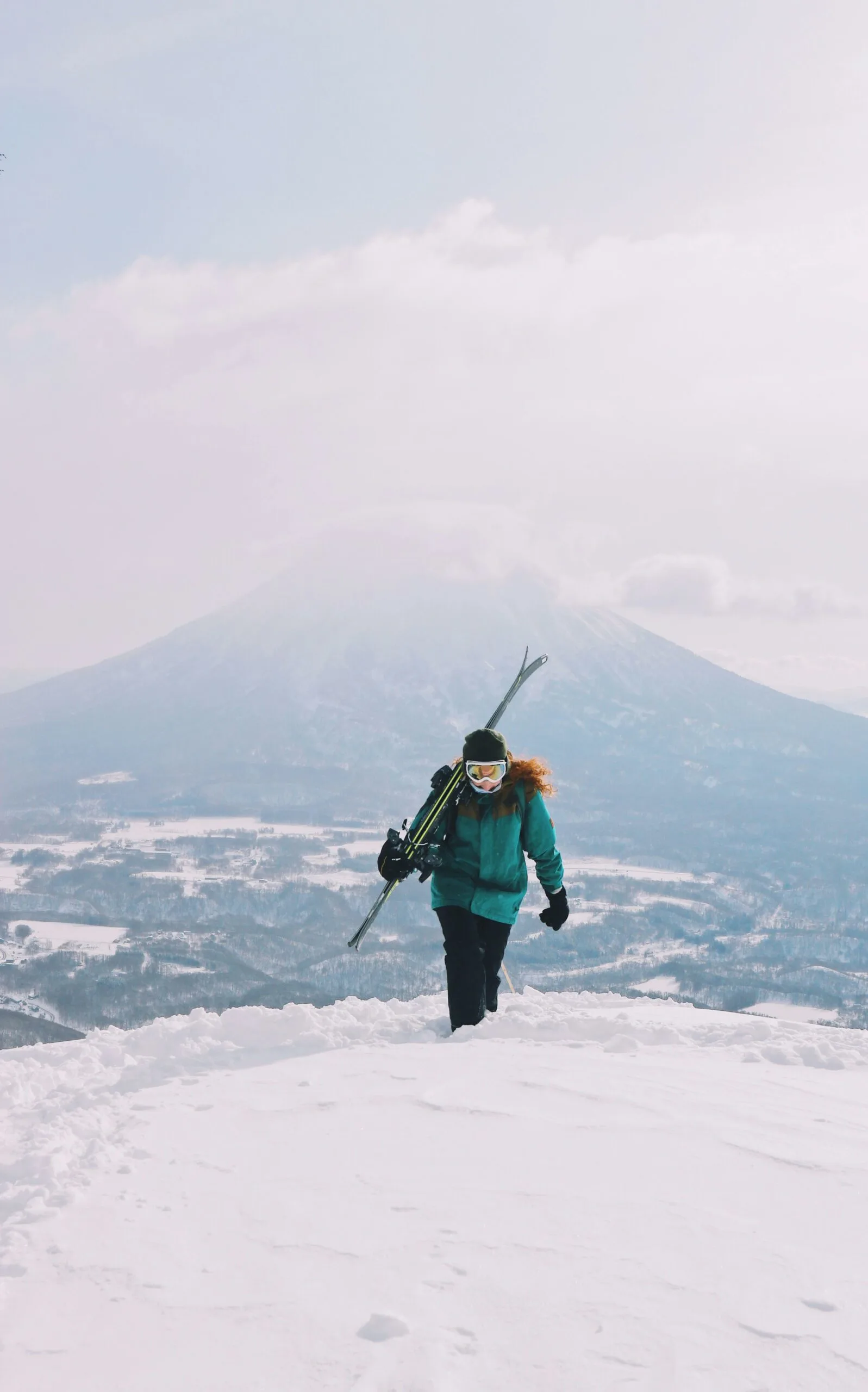
Hot springs on every mountainside. Heated tables you put your legs under. Snow monkeys, powder skiing, and a city that builds itself out of ice for a week every February.
Of course, there are trade-offs — daylight is short, Hokkaido genuinely bites, and one week in February is chaos. We will get to all of that.
Plan Your Japan Winter Trip at a Glance
Stop | Best months | Why go | Book ahead? |
|---|---|---|---|
Sapporo, Hokkaido | Dec–Feb | Snow Festival, ramen, powder within an hour | Yes — February sells out |
Otaru & Jozankei | Dec–Mar | Canal town plus a hot-spring valley | Not usually |
Noboribetsu | Dec–Mar | The best onsen town in the north | Ryokan yes, tours no |
Nagano | Jan–Feb | Snow monkeys in a steaming pool | Yes in peak weeks |
Hakuba & the Alps | Jan–Mar | Olympic-grade skiing, fire festivals | Yes for lessons |
Tokyo | Dec–Feb | Illuminations, clear skies, no rain | No |
Mt Fuji & Hakone | Dec–Feb | The clearest Fuji views of the year | Day tours yes |
Kyoto | Jan–Feb | Temples in snow, almost no queue | No |
| ⭐ BuKoo Rating | ⭐⭐⭐⭐⭐ (5 out of 5) |
|---|---|
| 🔥 BuKoo Verdict | A bucket-list must-do |
| ⏱️ Time needed | 10–14 days for two regions |
| 💵 Budget from | $150 a day for two, outside festival week |
| 💑 Best for | Skiers, food obsessives and anyone who loves a hot bath |
Why Winter Is the Best Time to Visit Japan
With Japan in winter you get the cherry blossom crowds gone and the autumn leaf crowds gone, and you walk into temples that queue for an hour in April. Your flights and rooms drop too, outside New Year.
In practice, the weather is easier than you expect. Tokyo and Kyoto are cold and bright rather than buried, and Mount Fuji is at its clearest of the whole year.
Still, one week will be genuinely difficult: the Sapporo Snow Festival in early February, when the whole city books out. Plan around it or plan for it — just do not turn up unaware.
8 Thrilling Stops for Japan in Winter
1. Sapporo and the Snow Festival, Hokkaido
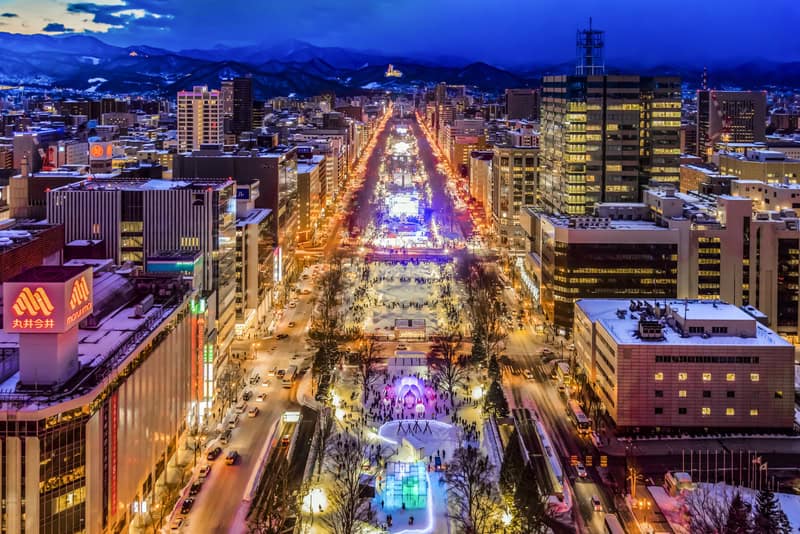
The far north has its own capital, and you should give it a few days. Sapporo owns winter here, and for one week in early February it builds a whole city out of ice.
The Snow Festival fills Odori Park with sculptures the size of buildings, lit after dark, and free for you to walk through. If you only have a day, a ski day trip to Asarigawa with gear included solves the rental problem for anyone who did not fly in with skis.
Festival week is your catch. Hotel rates in Sapporo double for it and the good rooms go months ahead, so either book early or come in mid-January, when the city is quieter and the snow is just as deep. The underground walkway from Sapporo Station to Odori is the local trick for crossing town without wind chill.
🐧 BuKoo Tip
The Japan Rail Pass stopped being an automatic yes when the price jumped — it now only pays off on genuinely long routes. A Tokyo–Kyoto–Tokyo trip alone does not cover it; add Hokkaido or Hiroshima and it does. Price your actual route on a fare calculator before you buy, and remember regional passes (JR East, JR Hokkaido) are often the better deal for a winter itinerary that stays north.
2. Otaru and Jozankei Onsen
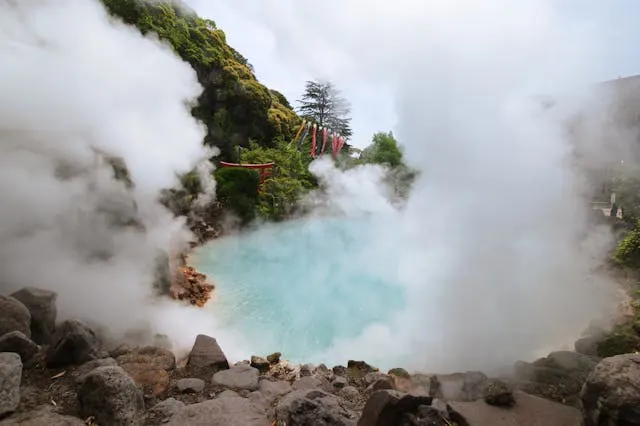
Meanwhile, Otaru sits half an hour from Sapporo and looks like a film set under snow — a gaslit canal, herring-boom warehouses, and more sushi per street than anywhere its size has any right to. Then you go and sit in hot water.
Time it for February and the canal gets better still: the Snow Light Path fills the towpath and the old rail line with candle lanterns for about ten nights, and it costs you nothing.
The combined Otaru, Jozankei and Mount Moiwa day trip saves you two awkward bus changes, and staying in Otaru rather than commuting back to Sapporo means you see the canal after the coaches leave.
3. Noboribetsu and Hell Valley
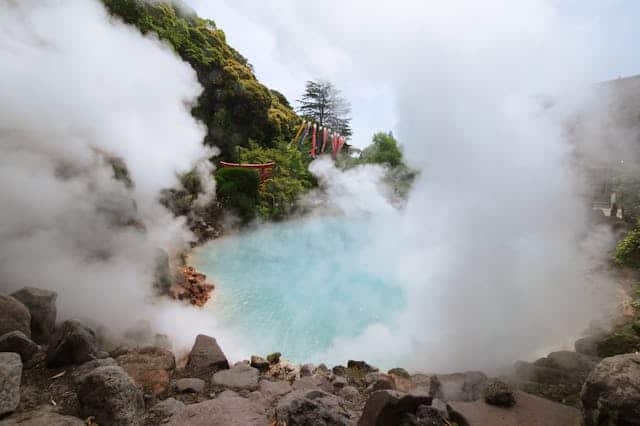
Then there is Noboribetsu, the onsen town that people who genuinely love onsen will name first. Above it sits Jigokudani — Hell Valley — a steaming, sulphurous crater that feeds the whole town its water, with a boardwalk running through the vents. It pairs naturally with Lake Toya, and a day tour from Sapporo covering both saves you a genuinely awkward two-bus connection.
The boardwalk through Hell Valley takes you about forty minutes and costs nothing, and the smell is part of the deal — sulphur, steam, and vents hissing loud enough to hear from the car park. Bring your own towel rather than renting at each bathhouse.
A day tour from Sapporo covers Noboribetsu and Lake Toya together, or stay overnight in the onsen town and use the baths at your ryokan before the day trippers arrive.
4. The Snow Monkeys of Nagano

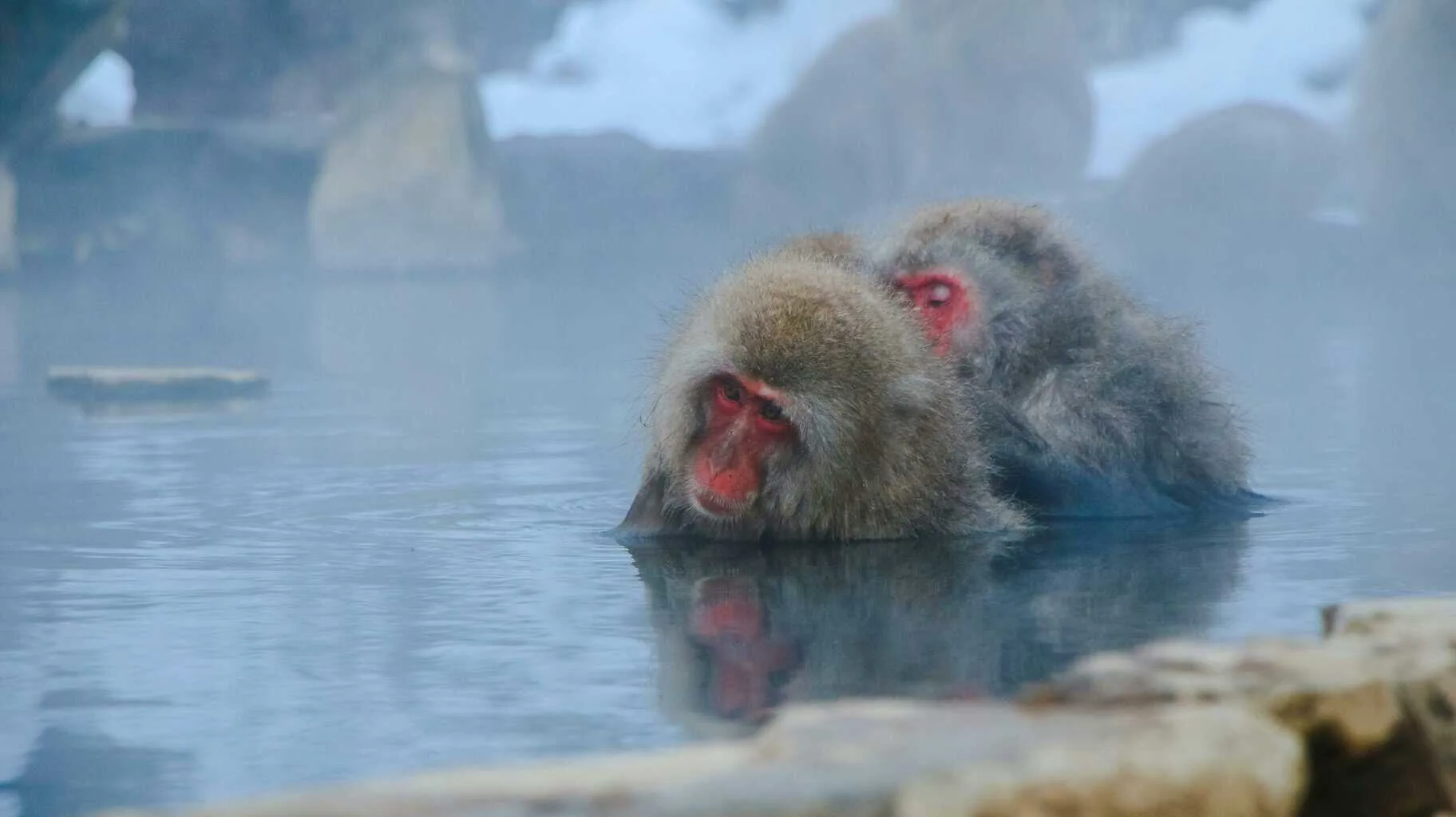
Jigokudani Yaen-Koen is the only place on earth where Japanese macaques bathe in a hot spring, and yes — it is every bit as good as the photographs suggest. They are wild, they come down on their own schedule, and January and February are when they are most reliably in the water.
You walk 1.6km in through cedar forest from the park entrance, snowy and often icy — so this is a microspikes morning, not a trainers one. A tour that adds soba lunch and Shibu Onsen turns a long travel day into an actual day out.
So go early. The macaques turn up when they feel like it, but the park is quietest before ten, and your photographs are far better before the crowd rings the pool three deep. Entry is a small cash fee at the gate, so bring yen.
5. Hakuba and the Japanese Alps
Of course, Hakuba hosted the 1998 Winter Olympics and still skis like it — ten linked resorts, long fall-line runs, and the Northern Alps standing over the whole valley. Nozawa Onsen, an hour away, is the other half of the argument: a village with thirteen free public bathhouses and a ski hill on top of it.
Hakuba is a valley, not a village, so where you sleep decides which lifts you can reach on foot. Happo-one has the most obvious terrain and the busiest base; Nozawa Onsen trades lift access for a village you can walk through in ski boots to a free bathhouse.
A Zenko-ji and snow monkey day trip fills your non-ski day neatly from either base, and rooms in Hakuba are cheapest midweek in January before the February rush.
6. Tokyo Under the Winter Lights
Tokyo in winter is cold, bright and almost rainless — the clearest skies of the year, and the season when those observation decks finally earn their ticket price. From November the illuminations take over: Marunouchi, Roppongi, Shibuya, whole avenues of blue and white light. A night walk through Shinjuku and Shibuya covers the best of them in two and a half hours, without you navigating the world’s busiest railway station in the dark.
Winter is also when you will find Tokyo at its most walkable — dry, bright and cold enough that a coffee stop feels earned rather than obligatory. The illuminations run from November to around Valentine’s Day, so a late-December trip catches all of them at once.
7. Mount Fuji and Hakone
Winter is Fuji season, and not by a small margin. The summer haze that hides the mountain for weeks simply is not there, and a day tour that returns by bullet train gets you the classic Kawaguchiko view and back in a day.
Above all, winter gives you the clearest Fuji views of the year — but the mountain still hides on a bad morning, so build in flexibility rather than pinning your whole trip to one afternoon. The Hakone loop — pirate boat, ropeway, Owakudani — works in reverse order to dodge the tour buses.
The Fuji and Hakone day tour does the driving on the day the trains get complicated, and staying in Hakone buys you a ryokan bath with the mountain in the window.
8. Kyoto in the Snow
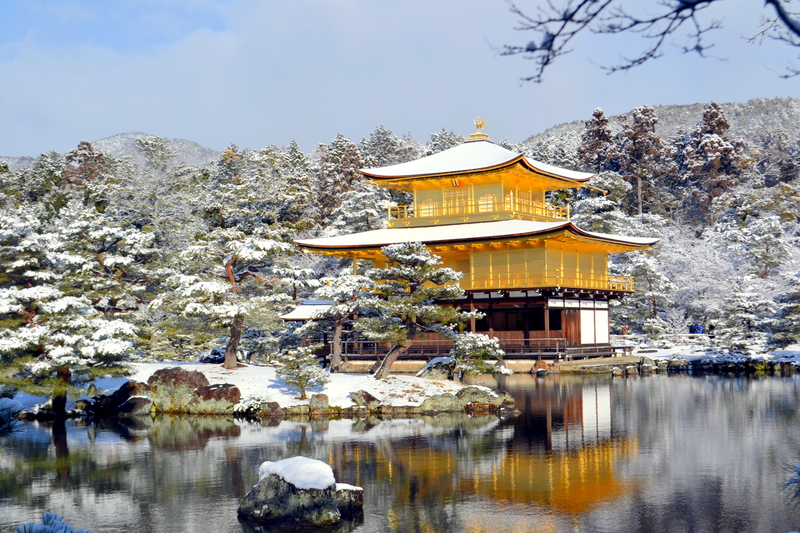
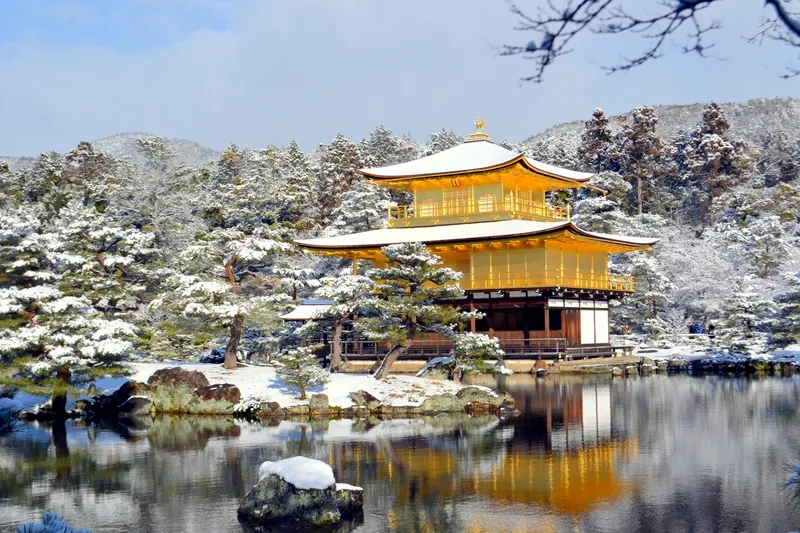
Snow in Kyoto is not guaranteed — a handful of days a year, usually January — but when it lands on Kinkaku-ji you will understand why people chase it. Even without it, winter empties the temples in a way no other season does.
An Arashiyama day with a scenic train, a river boat and an onsen at the end is the one we would book, and the Gion night walk gives you the lanes after dark when the day crowds have gone.
Kyoto snow is rare — a handful of mornings a season — and it melts by lunchtime, which is exactly why photographs of Kinkaku-ji under white are so prized. Watch the forecast and be ready to change your plans over breakfast.
The Arashiyama day covers the bamboo grove and the monkey park before the coach crowd arrives, and staying central in Kyoto means you can be at a temple gate at opening time.
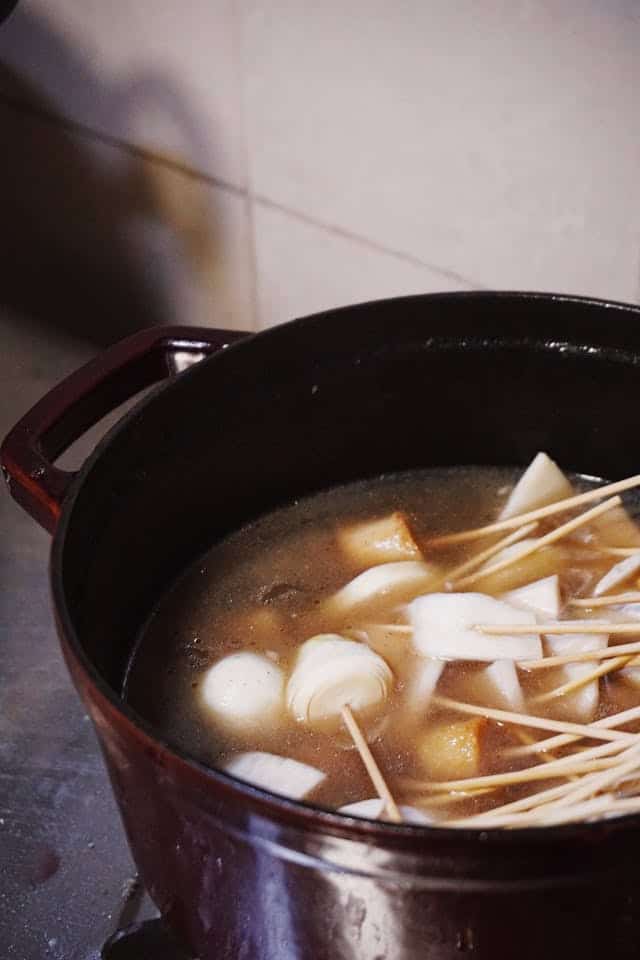
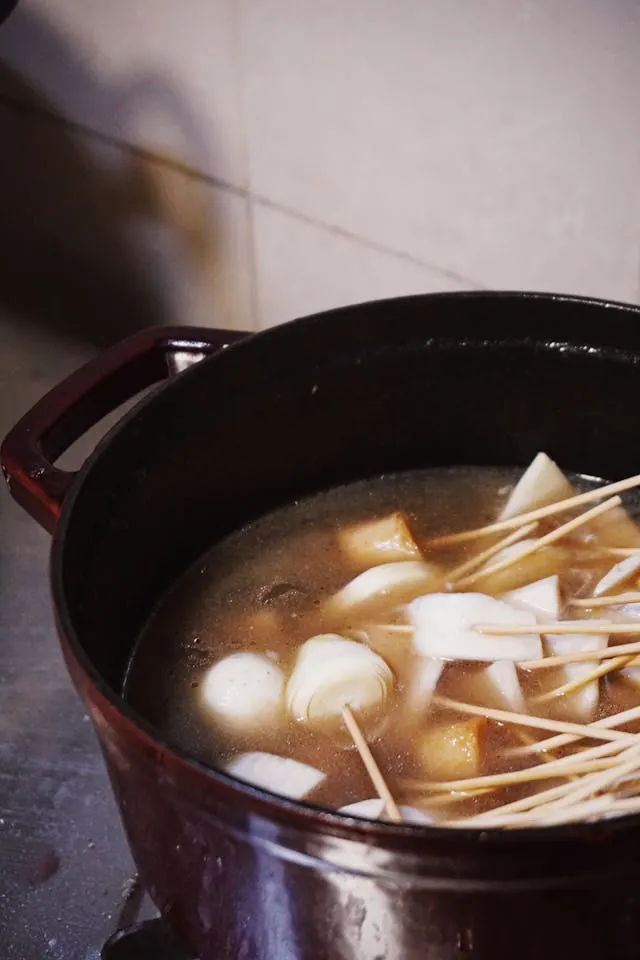
What to Eat When It Is Freezing
What a Winter Trip to Japan Costs
Item | Winter | Spring (sakura) | Notes |
|---|---|---|---|
Business hotel, Tokyo | $70–110 | $150–240 | January is the cheapest month of the year |
Ryokan with onsen, per person | $120–260 | $180–350 | Half-board is normal and worth it |
Ski day pass, Hakuba | $55–70 | n/a | Cheaper than any comparable Alpine resort |
Guided day tour | $90–180 | $95–190 | Same price, far smaller groups |
Tokyo–Kyoto shinkansen, one way | $95 | $95 | Fixed; the pass only pays off on longer routes |
⭐ Quick Picks
❄️ Best single winter experience: the snow monkeys at Jigokudani — there is nothing else like it anywhere.
🎿 Best for skiers: Hakuba for terrain, Niseko for powder, Nozawa if you want a village and free bathhouses with your skiing.
💵 Best value week: mid-January — after New Year, before the Snow Festival. Hotels are at their annual floor.
♨️ If you do one thing: stay one night in a ryokan with a private open-air bath. Snow falling while you sit in hot water is the whole trip in one image.
🛒 One thing to buy: a quick-dry microfiber towel — onsen almost never provide one, and renting adds up fast.
Good to Bring
- Quick-dry microfiber towel — onsen and sento rent towels, they do not hand them out
- 20,000mAh power bank with built-in cables — cold murders phone batteries, and you navigate on yours all day
- Fleece balaclava — Sapporo in February is not Kyoto in February
- Supportive insoles — 20,000 steps a day on hard surfaces
- Packable slippers — shoes come off at ryokan, temples and homes, constantly
- Foldable duffel — lies flat in your case until the shopping happens
Japan in Winter FAQs
How cold does it actually get?
In short, Tokyo and Kyoto sit around 41–50°F by day — cold, but rarely below freezing and hardly ever snowy. Hokkaido is a different country entirely, so pack for both if you are doing both.
When is the Sapporo Snow Festival?
Early February, for about a week. Book flights and rooms three to six months out, or dodge it and come mid-January instead — the snow is just as deep and the city is yours.
Do I need a Japan Rail Pass?
Less often than the internet suggests. Since the 2023 price rises the rail pass only pays off if you are covering serious distance, so price your actual route before you buy one.
Is skiing in Japan expensive?
No, and that surprises people. Day passes run $55–70 at world-class resorts, which is a fraction of what you would pay in the Alps or Colorado.
Can I use an onsen with tattoos?
It varies. Many traditional baths still refuse tattoos, but tourist-facing onsen and private family baths generally will not mind — ask, or book a private bath and skip the question entirely.
Want more cold-weather planning? Try the US national parks in winter, Europe in winter, European winter sun, our winter packing guide and nine trails for winter hiking in the USA.
And from the Vagrants archive: the original Japan winter itinerary, where to go in Southeast Asia, and how to dress like a local.