
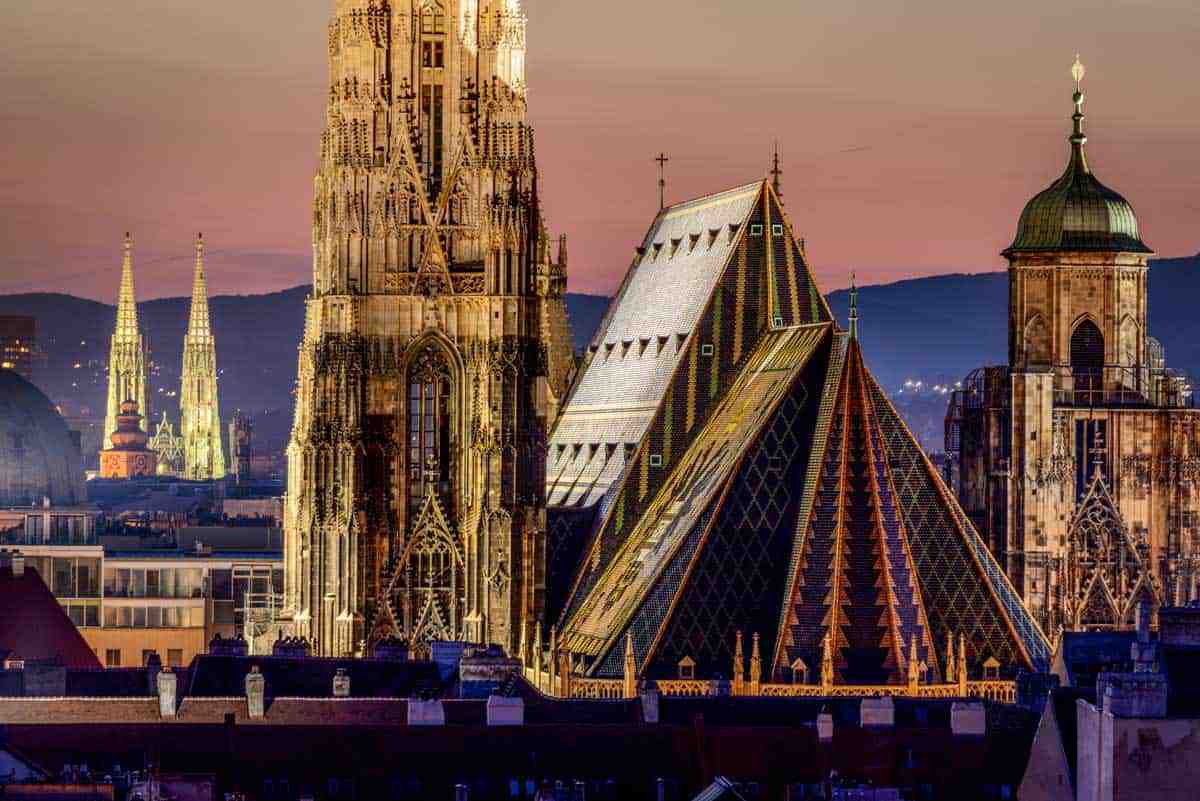
Let us clear one thing up: Vienna in winter is not a compromise. This city was built for the cold — the coffee houses, the concert halls, the palaces you walk through in a coat — and almost everything that makes it famous happens indoors on purpose.
Of course, you have heard about the Christmas markets, and they close on 26 December, which is why so many people write off January and February. That is the mistake we want to talk you out of.
Plan Your Vienna Winter Trip at a Glance
Month | Average high / low | Sunshine | What is on |
|---|---|---|---|
December | 3.8°C / −1.8°C | 1.5 hrs a day | Christmas markets to the 26th, busiest and priciest |
January | 3.2°C / −2.9°C | 2.5 hrs a day | The quietest month, and the Eistraum opens on the 22nd |
February | 5.7°C / −2°C | 3.5 hrs a day | Ice skating, ball season, light returning |
Snowfall | About 53 cm a year | — | Enough to look the part, rarely enough to disrupt |
| ⭐ BuKoo Rating | ⭐⭐⭐⭐⭐ (5 out of 5) |
|---|---|
| 🔥 BuKoo Verdict | Built for bad weather |
| ⏱️ Time needed | 3–4 days, 5 with a day trip |
| 💵 Budget from | $150 a day for two |
| 💑 Best for | Anyone who would rather look at things than climb them |
Why Vienna in Winter Is the Season It Was Made For
Vienna is cold but not brutal, so do not overpack. January averages a high of about 3°C and a low near −3°C, which is coat weather rather than survival weather. What you will really notice is the grey: December gives you about an hour and a half of sunshine a day.
In fact, that greyness is the point. You are visiting a city whose whole social life is built around sitting indoors with a coffee and a newspaper, and it makes complete sense in February in a way it never quite does in July.
The Christmas Markets, and When They Actually End
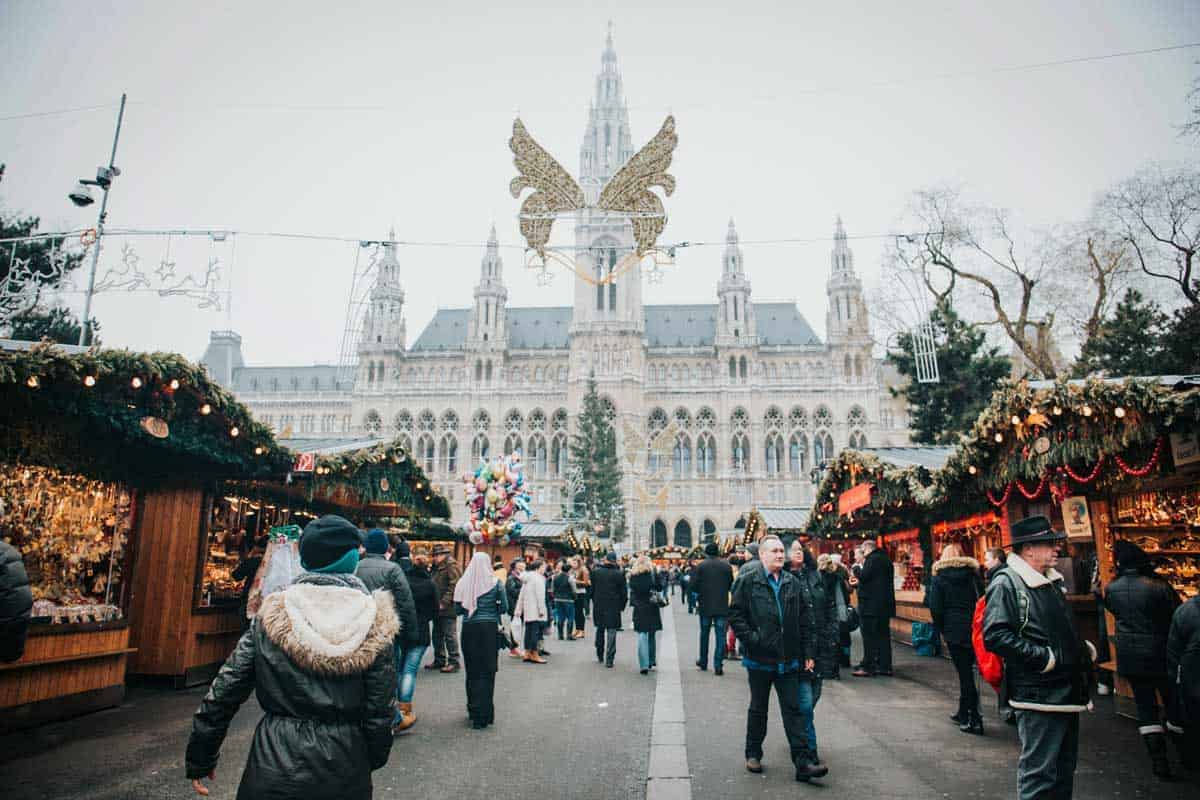
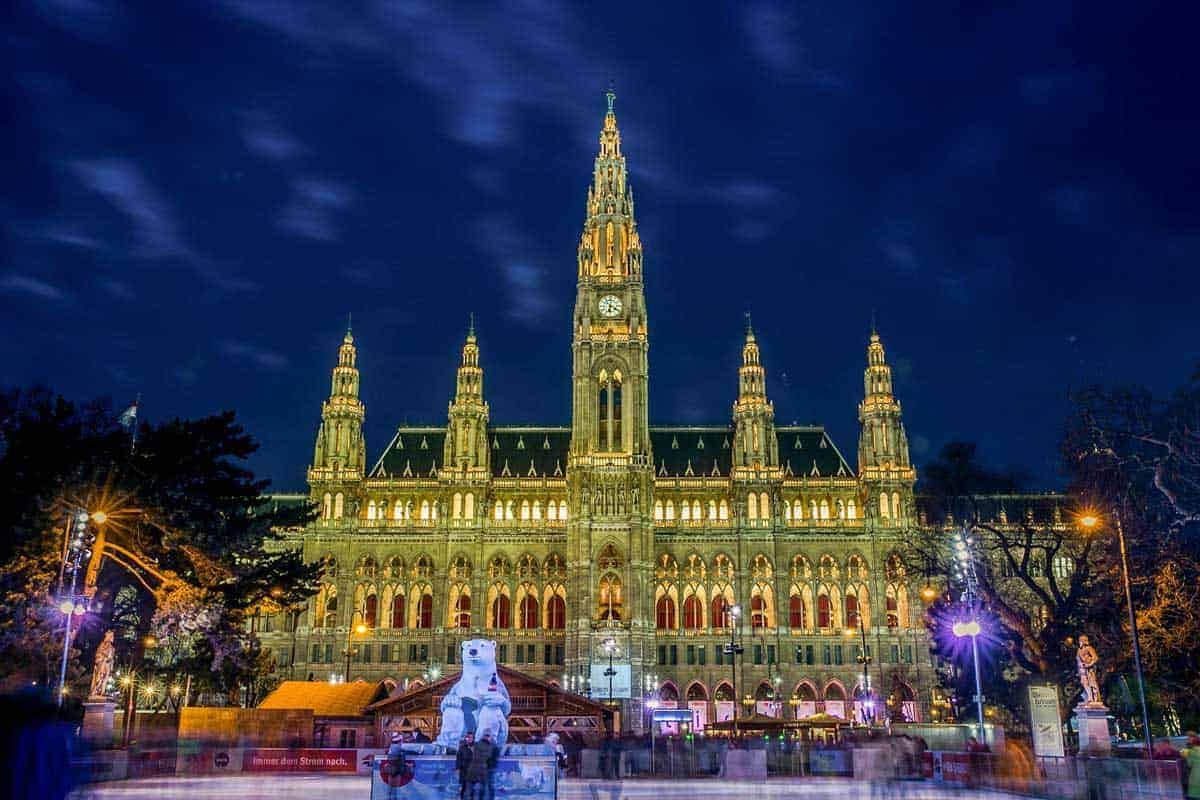
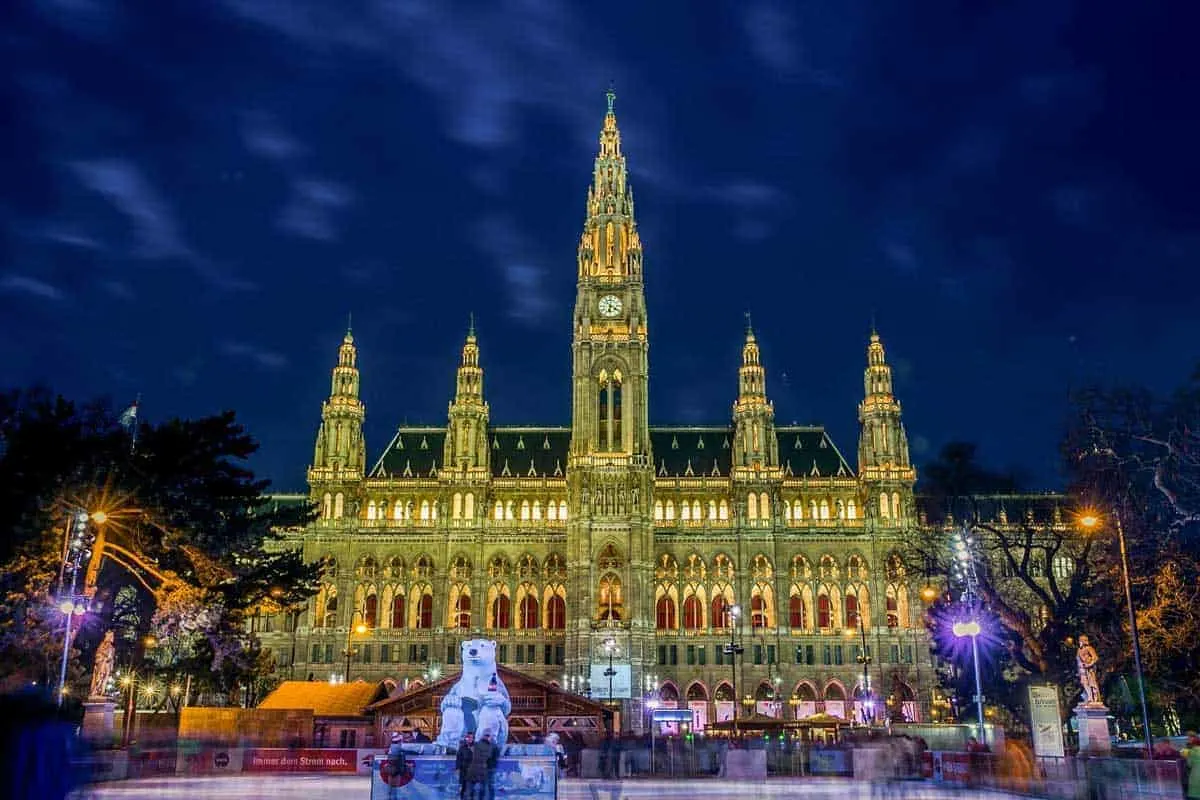
First, the big one. It fills Rathausplatz in front of the City Hall from 13 November to 26 December, daily 10am to 10pm — though on Christmas Eve you have only until 6.30pm.
But here is what most people miss: you are not looking at one market, you are looking at about twenty, and the small ones are better. Spittelberg threads through a lattice of Biedermeier lanes, Karlsplatz leans craft and organic, and Schönbrunn puts one in the palace forecourt.
Go on a weekday evening if you possibly can. Your Glühwein mug carries a deposit you get back — or you keep the mug, which is how everybody ends up with a shelf of them.
🐧 BuKoo Tip
Rathausplatz does a handover most visitors never hear about. The Christmas market closes on 26 December, a smaller rink runs there until 6 January, and then on 22 January the whole square becomes the Wiener Eistraum — 10,000 m² of ice on two levels, open daily until 10pm through to 8 March.
So a February trip is not the consolation prize. It is the same square, a third of the crowd, and hotel rates that bear no resemblance to December. Buy the skating ticket online and it is 10% cheaper than at the gate.
Skating in Front of the City Hall
Meanwhile, the Eistraum is not really a rink, it is a route. You skate along paths of ice winding between the trees of the Rathauspark, there is a raised Sky Rink above the main surface, and eight curling lanes sit off to one side.
And they hold 2,000 pairs of rental skates that they pre-heat for you — which sounds like a small thing until you have pulled on cold rental boots somewhere else. Beginners get free practice areas on weekday mornings too.
The Coffee Houses, Which Are the Real Attraction
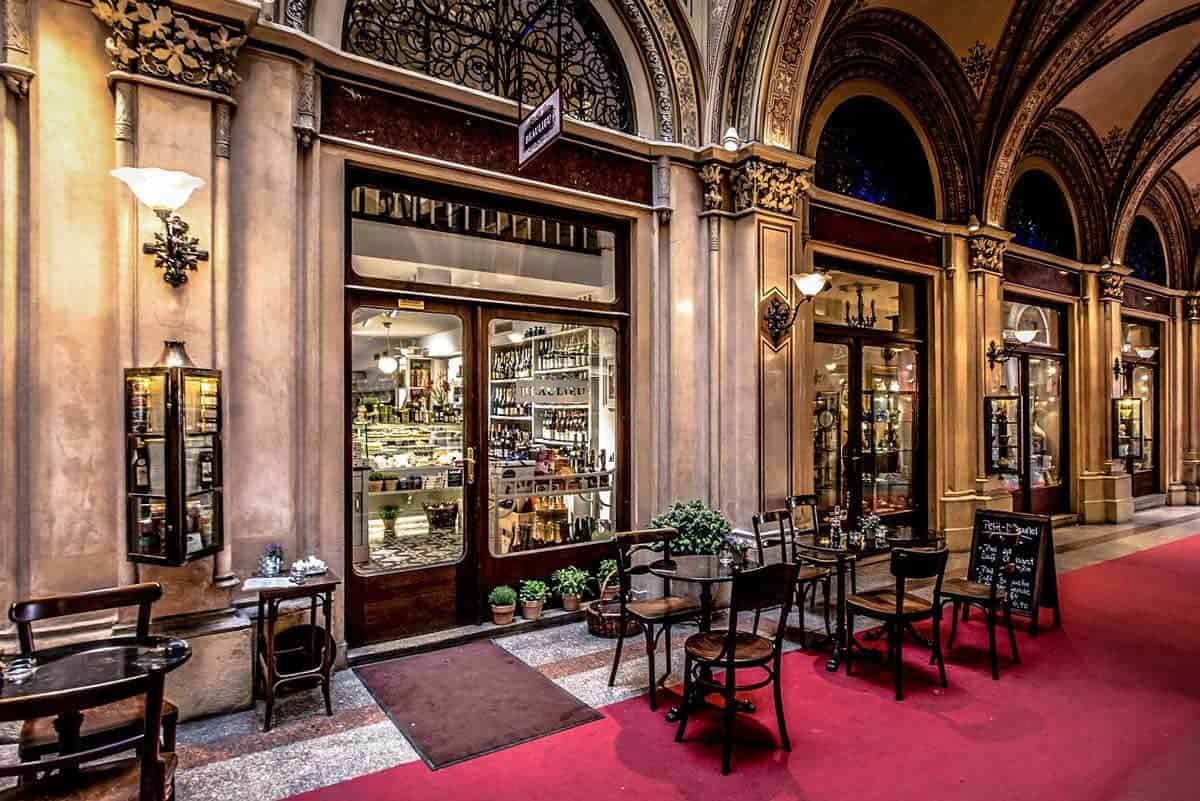
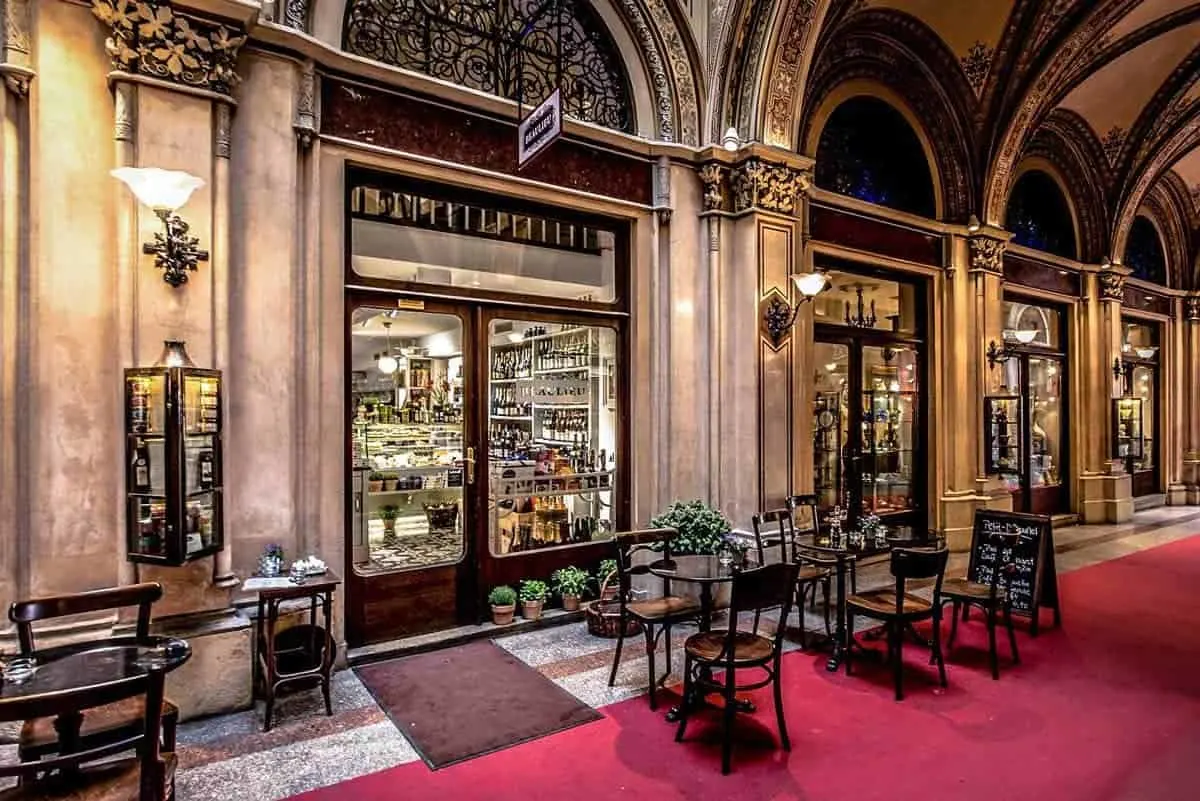
Here is a fact worth getting right, because most of the internet gets it wrong. Viennese coffee house culture has been on Austria’s national inventory of intangible cultural heritage since 2011 — a national listing, not the UNESCO international one.
Above all, the definition they gave it is the best description anyone has managed: a place where you consume time and space, but only the coffee appears on your bill. Marble tables, bentwood chairs, a rack of newspapers, and nobody hurrying you out.
Order by name rather than pointing, and you will feel like less of a tourist immediately. A Melange is your default, an Einspänner arrives in a glass under whipped cream, and asking for “a coffee” earns you a raised eyebrow. Then sit for two hours — that is the whole idea.
The Palaces, Without the Queue
Then there is Schönbrunn. Give it about two hours inside, walk the gardens for free, and in winter you can do both without booking three days ahead. Climb the hill to the Gloriette if there is snow — worth it on its own.
In town, the Hofburg holds the Sisi Museum and the imperial apartments, which will fill a grey afternoon beautifully. Both palaces give you an indoor day, which is exactly what you want in January.
A Concert, Because This Is Vienna
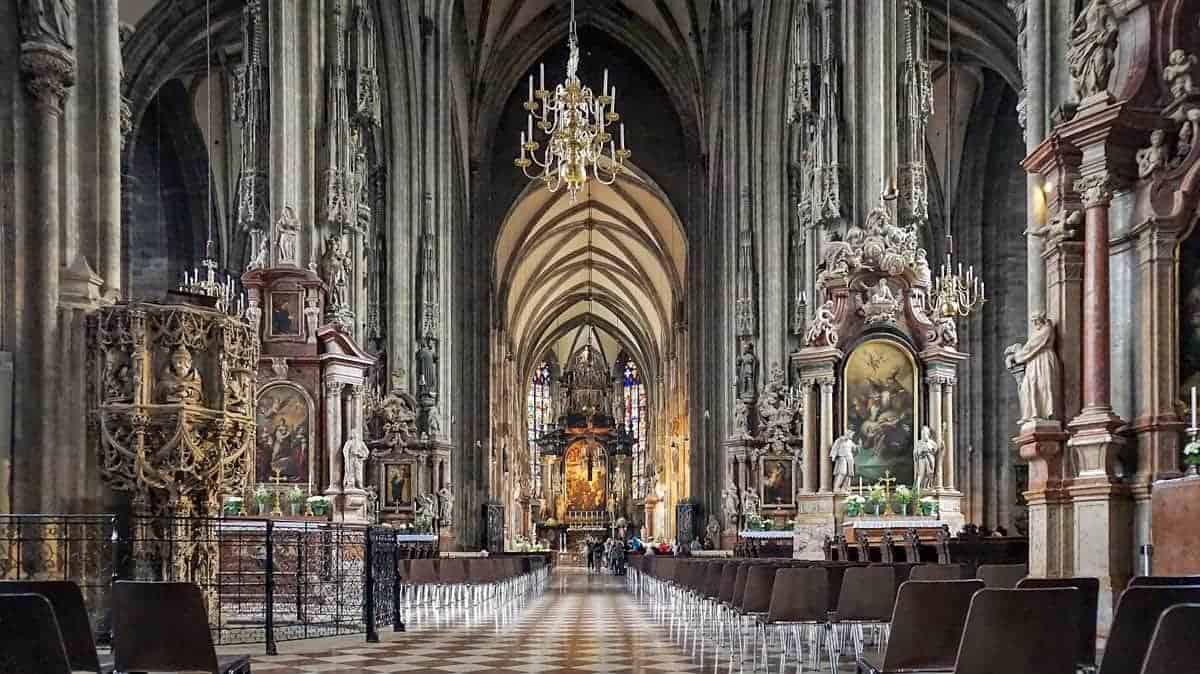
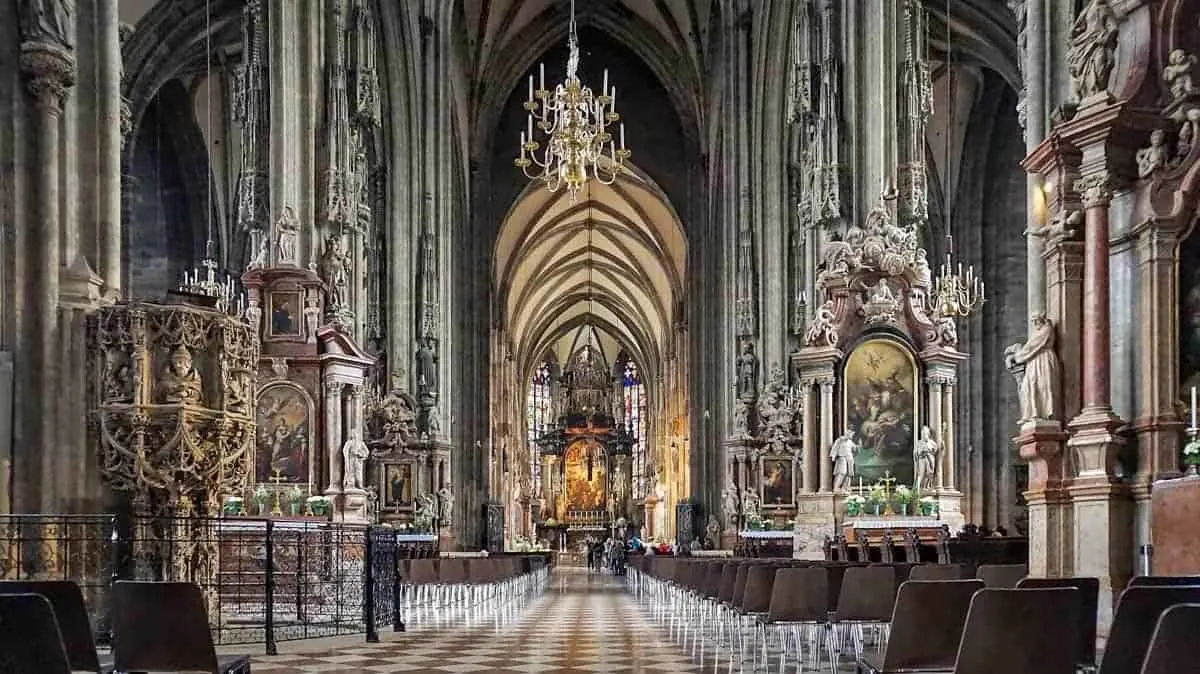
Skipping live music here is like skipping the food in Bologna — do not do it to yourself. The Musikverein’s Golden Hall is the room the Vienna Philharmonic plays and the one you watch on television every New Year, and Mozart and Strauss programmes run there all winter.
Purists will point you at the Staatsoper instead, where you can buy standing-room tickets shortly before curtain for a few euros and the queue is half the fun. Either way, book before you fly rather than hoping on the night.
When the Weather Wins
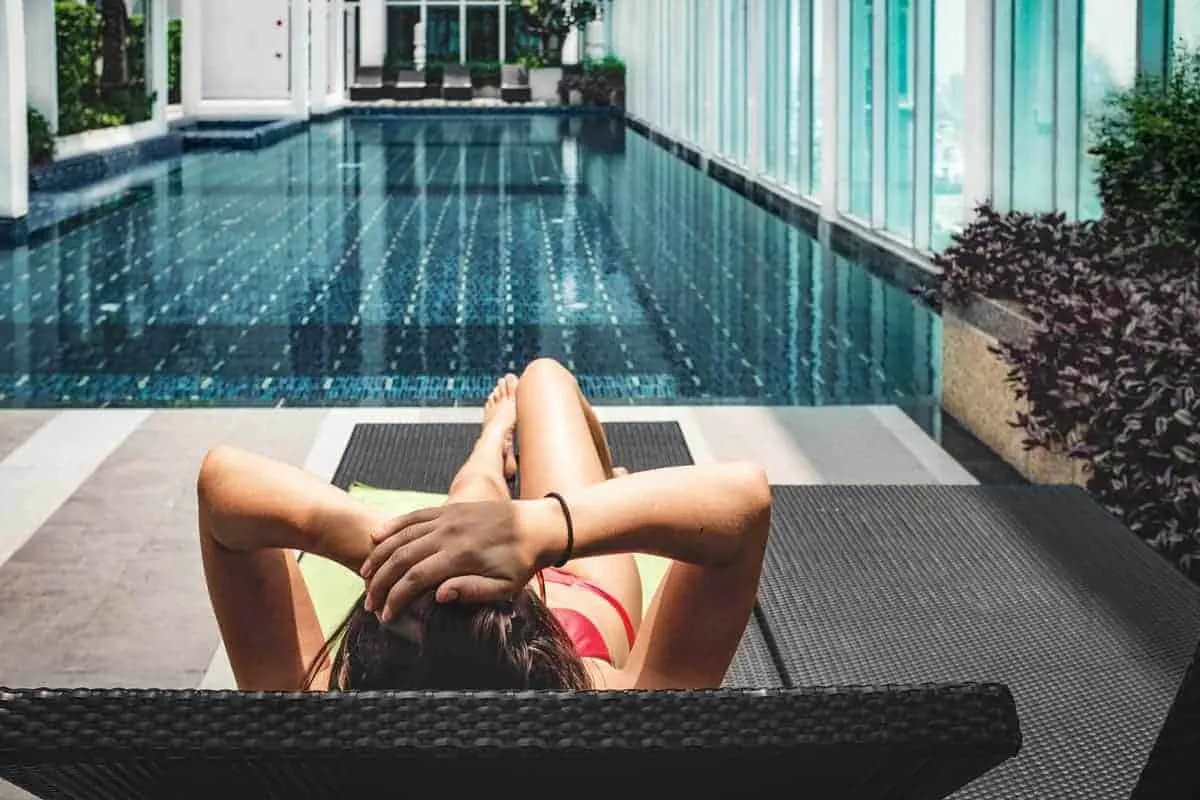
Still, Vienna sits on hot springs and treats them properly. Therme Wien is the big one, twenty minutes out on the U1, and you get a genuine thermal complex rather than a hotel pool with ambitions.
Would you rather leave the city entirely? the small-group day trip to Hallstatt gives you the lake village at its quietest, once the summer coaches have gone and the mountains behind it are white.

What Is Open When in Vienna in Winter
What | When | Worth knowing |
|---|---|---|
Christmas markets | 13 Nov – 26 Dec | 10am–10pm; 24 Dec closes at 6.30pm |
Rathausplatz rink | Until 6 January | Smaller; closed on 31 December |
Wiener Eistraum | 22 Jan – 8 Mar | 10,000 m², two levels, daily to 10pm |
Palaces and museums | All winter | The point of a January trip |
Coffee houses | Always | Some of the oldest close one day a week |
Where to Stay in Vienna in Winter
In short, the Innere Stadt puts you inside the Ring and within walking distance of most of this list — which matters a lot when it is 2°C and dark at four. Yes, it is the priciest district, but in January that gap narrows considerably.
Neubau and the 7th are better value, and where we would stay. You get a tram ride from the centre, a walk to the Spittelberg market, and coffee houses with actual locals in them.
Good to Bring
Vienna is a walking city with very warm interiors, so your packing problem is layers you can shed the moment you step inside.
- A packable puffer — coat outside, crushed into a bag inside a coffee house
- A merino base layer — the layer that makes a thin coat work
- Waterproof leather boots — cobbles, slush and 15,000 steps a day
- A compact windproof umbrella — Vienna does grey drizzle better than snow
- An RFID money belt — market crowds are pickpocket country
- Compression packing cubes — winter clothes eat a carry-on alive
⭐ Quick Picks
🎄 Best market: Spittelberg, threaded through Biedermeier lanes, rather than the crush at Rathausplatz.
⛸️ Best reason to come in February: the Wiener Eistraum, 10,000 m² of ice in front of the City Hall until 8 March.
☕ Best free thing: two hours in a coffee house with a newspaper. Nobody will ask you to leave.
🎻 Best splurge: a concert in the Musikverein’s Golden Hall, the room the Philharmonic plays.
🛒 One thing to buy: a packable puffer. Every building you enter is 22°C.
Vienna in Winter FAQs
How cold does Vienna get?
In practice, January averages about 3°C by day and −3°C at night, so you are looking at cold rather than extreme. Honestly, the grey takes more getting used to than the temperature does.
Are the Christmas markets worth the December prices?
Once, absolutely — go and see them. But you will pay the year’s highest hotel rates and share the big markets with everybody else, so spend your second visit in late January instead.
What is there to do after the markets close?
Most of the city, happily. You still get the palaces, museums, concerts and coffee houses all winter, and the Wiener Eistraum takes over Rathausplatz from 22 January to 8 March.
Do I need to book palaces in advance?
In winter you rarely need more than a day or two ahead, which is the opposite of summer. Grab a timed ticket anyway — it saves you standing about in the cold.
Is Vienna walkable in winter?
Very. You can cross the centre on foot, the trams and U-Bahn cover everything else, and the pavements get cleared quickly after the little snow that falls.
Keep Exploring
Fancy more of Europe when it is cold? Have a look at planning a European winter trip, ski holidays in Bulgaria, and Montenegro in winter.
And here is the shorter round-up that started this one: the shorter round-up we published first.