
So you are thinking about Iceland in winter? Friend, this is the good version of Iceland. Yes, everyone comes for the northern lights, and no, nobody can promise you those — but the rest of what winter hands you is the part people forget to mention.
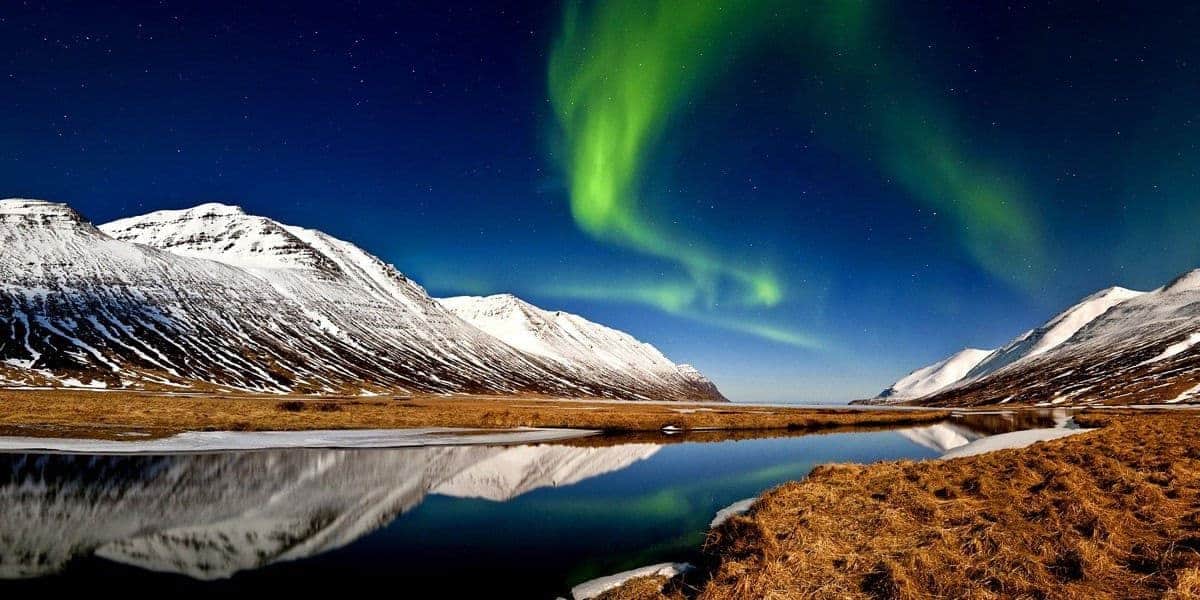
Ice caves that simply do not exist in summer, a Golden Circle with room to breathe, and a country that costs noticeably less between January and March. Here is how we would plan it.
Plan Your Iceland Winter Trip at a Glance
Month | Daylight | Aurora odds | What it suits |
|---|---|---|---|
December | 4.5–5 hrs | Good, if the sky cooperates | Christmas markets and the darkest skies |
January | 4.5–7 hrs | The strongest month | Ice caves and aurora, lowest prices |
February | 7–10 hrs | Still very good | The best balance of light and dark |
March | 10–13.5 hrs | Falling away by month end | Road trips, with aurora as a bonus |
| ⭐ BuKoo Rating | ⭐⭐⭐⭐⭐ (5 out of 5) |
|---|---|
| 🔥 BuKoo Verdict | Worth the dark |
| ⏱️ Time needed | 6–8 days for the south, 4 for Reykjavík |
| 💵 Budget from | $180 a day for two |
| 💑 Best for | Anyone who would rather see one thing properly than ten things briefly |
Why Iceland in Winter Beats the Summer Version
Of course, come in July and you get crowds, high prices and a midnight sun that quietly takes the aurora off the menu for four months. Winter trades all of that the other way.
Now, December really does run on about four and a half hours of daylight — sun up near 11am, gone by a quarter to four. It sounds brutal, and then you get there and realise the light that does show up is low and gold and lasts the whole time. Everything else happens in the dark, which is rather the point.
The Northern Lights: Why Iceland in Winter Is the Best Bet
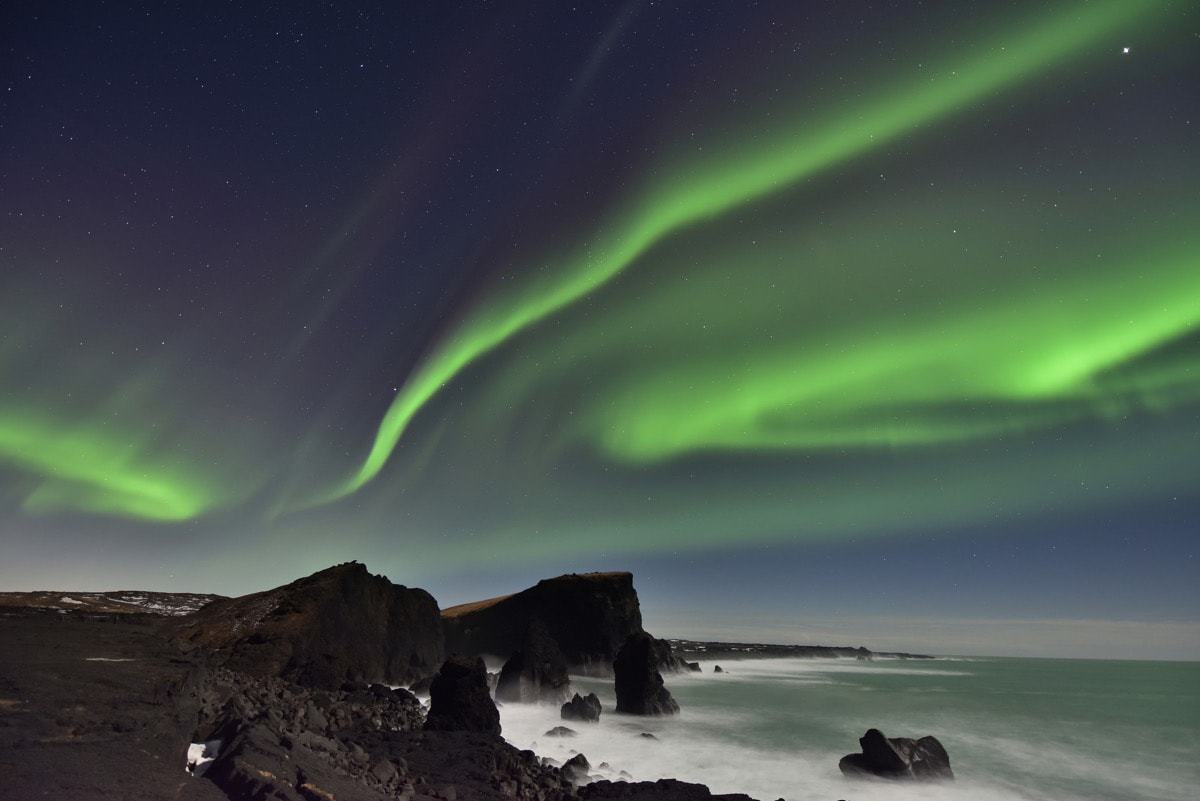
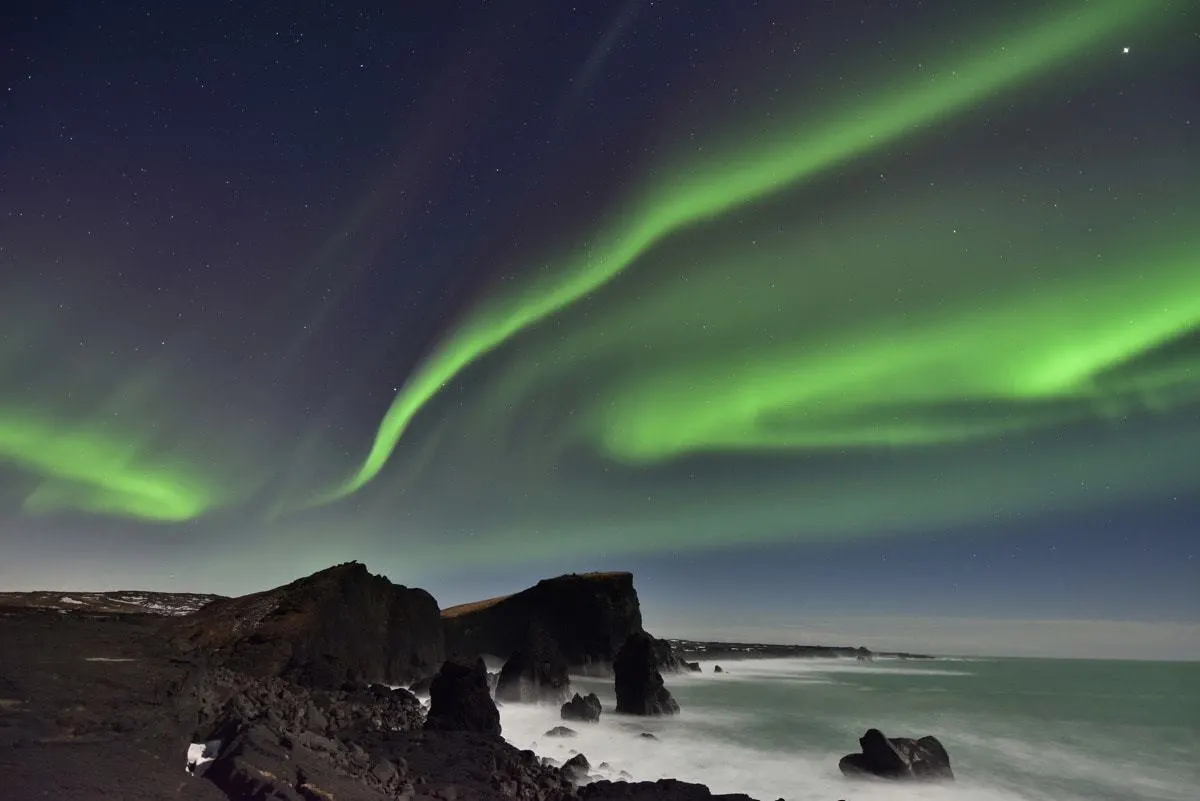
Above all, here is the honest version: the aurora is a forecast, not a fixture. You need darkness, thin cloud and solar activity all at once, and only that last one is beyond anyone’s control.
So, give yourself nights, plural. Three or four evenings in the country turns a gamble into decent odds, and January is the strongest month of the whole winter for it.
And go with a guide rather than standing hopefully outside your hotel. The buses chase gaps in the cloud, which is genuinely the whole trick, and several operators will take you out again free if the sky lets you down.
🐧 BuKoo Tip
Check vedur.is before you commit to a night out — this is the one that saves people. The Icelandic Met Office publishes an aurora forecast with a cloud-cover map, and cloud is what actually ruins most attempts, not weak activity.
Then book a tour that takes you out again free if the lights do not show. You pay once and go three nights running if you need to, which quietly turns a coin flip into decent odds.
Ice Caves: The One Thing You Can Only Do Now
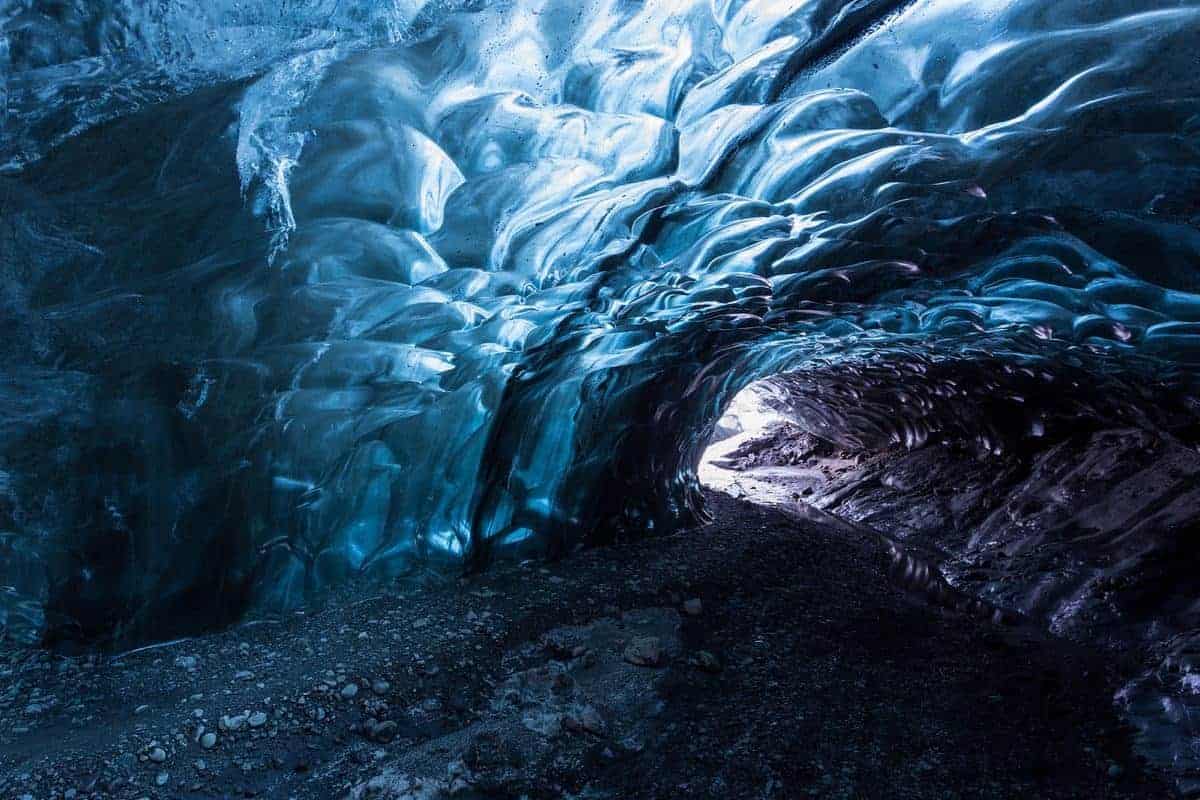
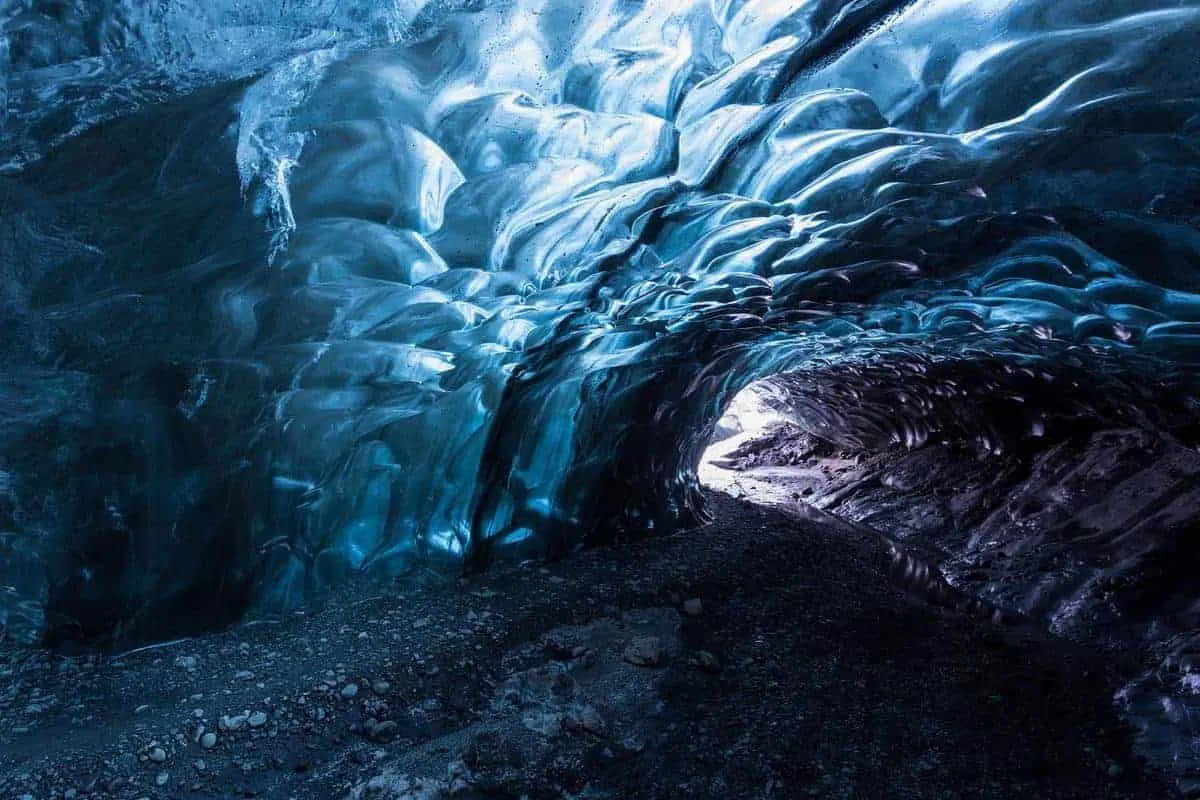
In fact, this is the one we would not skip. Iceland’s natural ice caves exist in winter and at no other time of year, and not by tradition — summer meltwater carves the channels, autumn cold drains and freezes them, and by November they are solid enough to walk into.
The season runs November through March, weather permitting. A warm, wet spell can flood a cave and shut it at a few hours’ notice, so operators move between caves rather than cancel on you.
One thing to be clear about: you cannot do this on your own. Nobody goes in without a glacier guide, a helmet and crampons, and the operators hand you all three. This is the one activity in Iceland where the guided version is not the lazy option — it is the only one.
The Two Drives Everyone Does, and Should
The Golden Circle
Þingvellir, Geysir and Gullfoss in a single loop out of Reykjavík, and in winter the whole thing fits neatly inside the daylight you get. Gullfoss half-frozen beats Gullfoss in July, and you will have the viewing platform more or less to yourself.
Then drive it yourself on a clear day in a normal car, or take the classic full-day tour and let somebody else watch the ice for you. Want a soak at the end of it? the version that finishes at the Secret Lagoon is the better afternoon.
The South Coast
Seljalandsfoss, Skógafoss, the black sand at Reynisfjara, glacier tongues hanging behind all of it — this is the drive that sells Iceland, and honestly it deserves the hype.
One serious word, though. Reynisfjara’s sneaker waves kill people most years and the winter swell is the worst of it, so stay well back from the water line no matter what everyone else is doing. Start at first light too, because the daylight runs out somewhere around Vík.
Hot Water: The National Pastime of Iceland in Winter
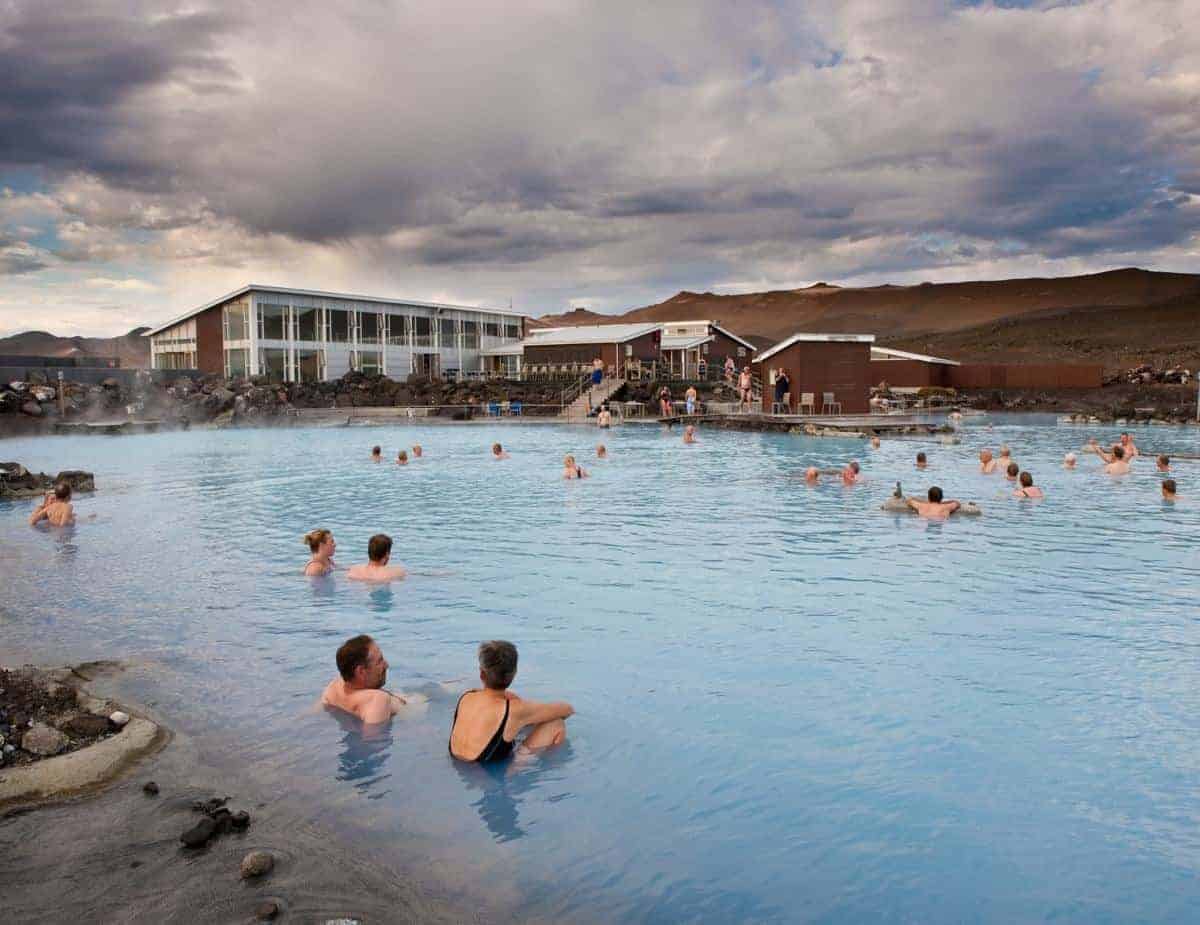
The Blue Lagoon is the famous one, and it really is lovely in winter — steam sitting on the water, air below freezing above it. Book your time slot before you fly, because walk-ups have not been a thing there for years.
But here is the tip locals would give you: every town has a municipal pool with hot pots at different temperatures, and they cost a few dollars rather than a few hundred. Icelanders go several times a week. When the aurora forecast looks hopeless, this is how you spend the evening.
Getting on the Glacier
If the ice cave gave you a taste for it, the glaciers themselves are open all winter. A guided hike at Skaftafell straps crampons on you and walks you up onto Vatnajökull, and the “easy” grade genuinely is easy — you do not need to be a mountaineer.
Want something faster? a snowmobile run on Langjökull leaves from Geysir and slots neatly onto the end of a Golden Circle day. The man-made tunnel at Húsafell is your reliable fallback if the natural caves have closed.
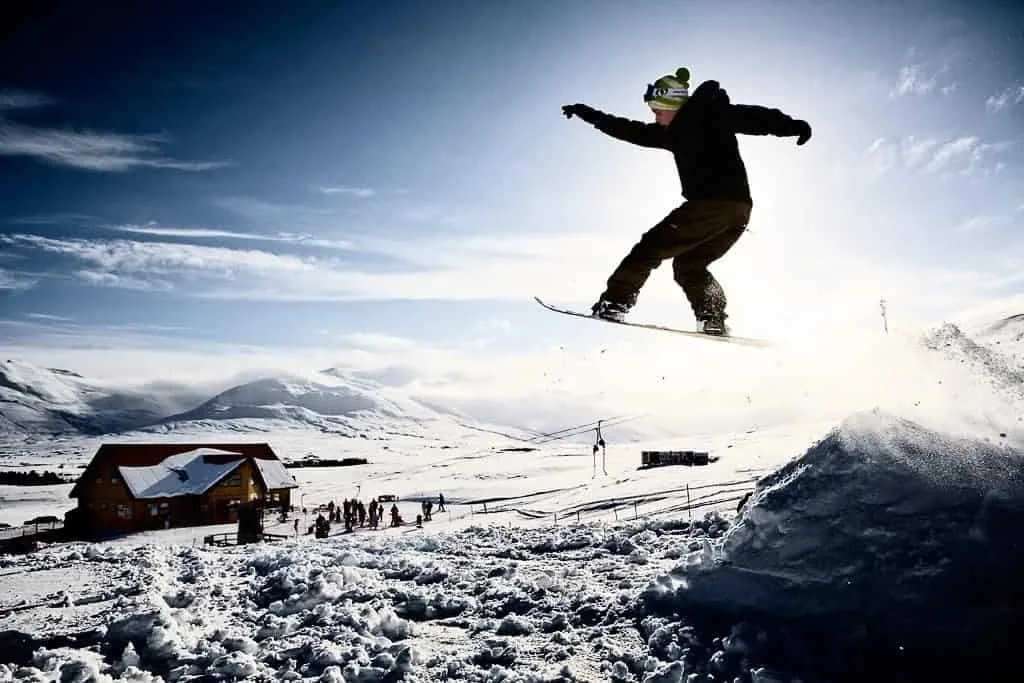
Reykjavík When It Is Dark at Four
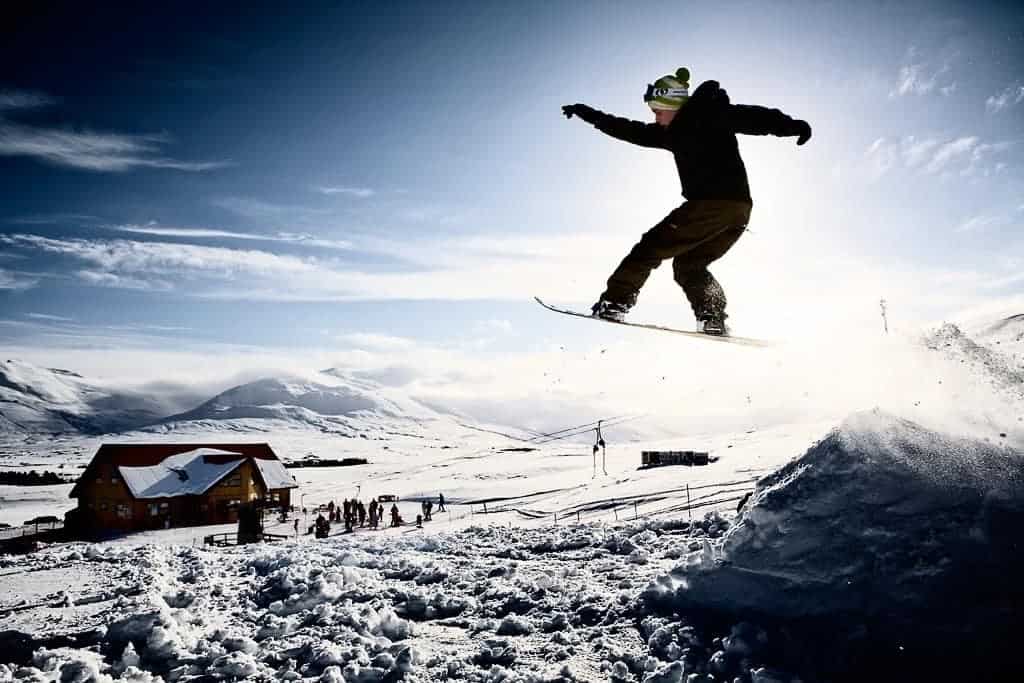
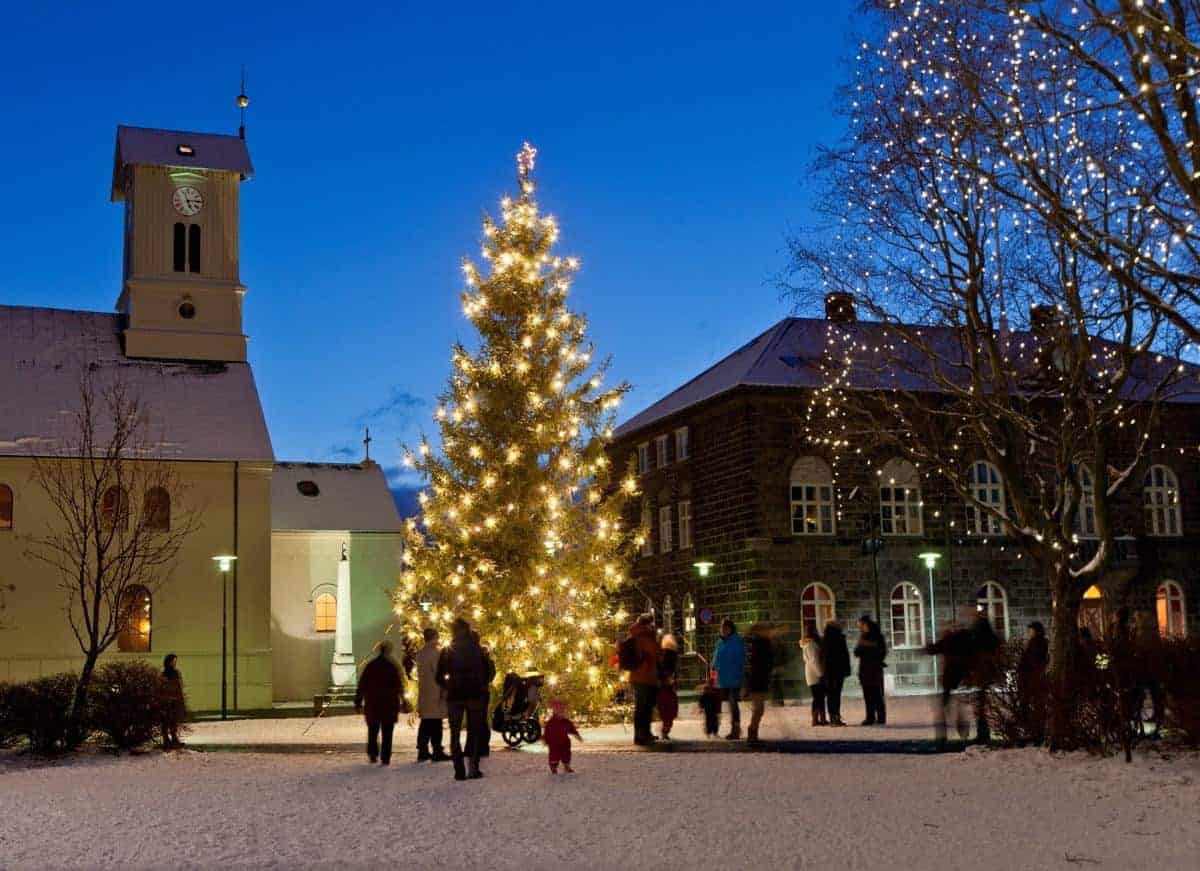
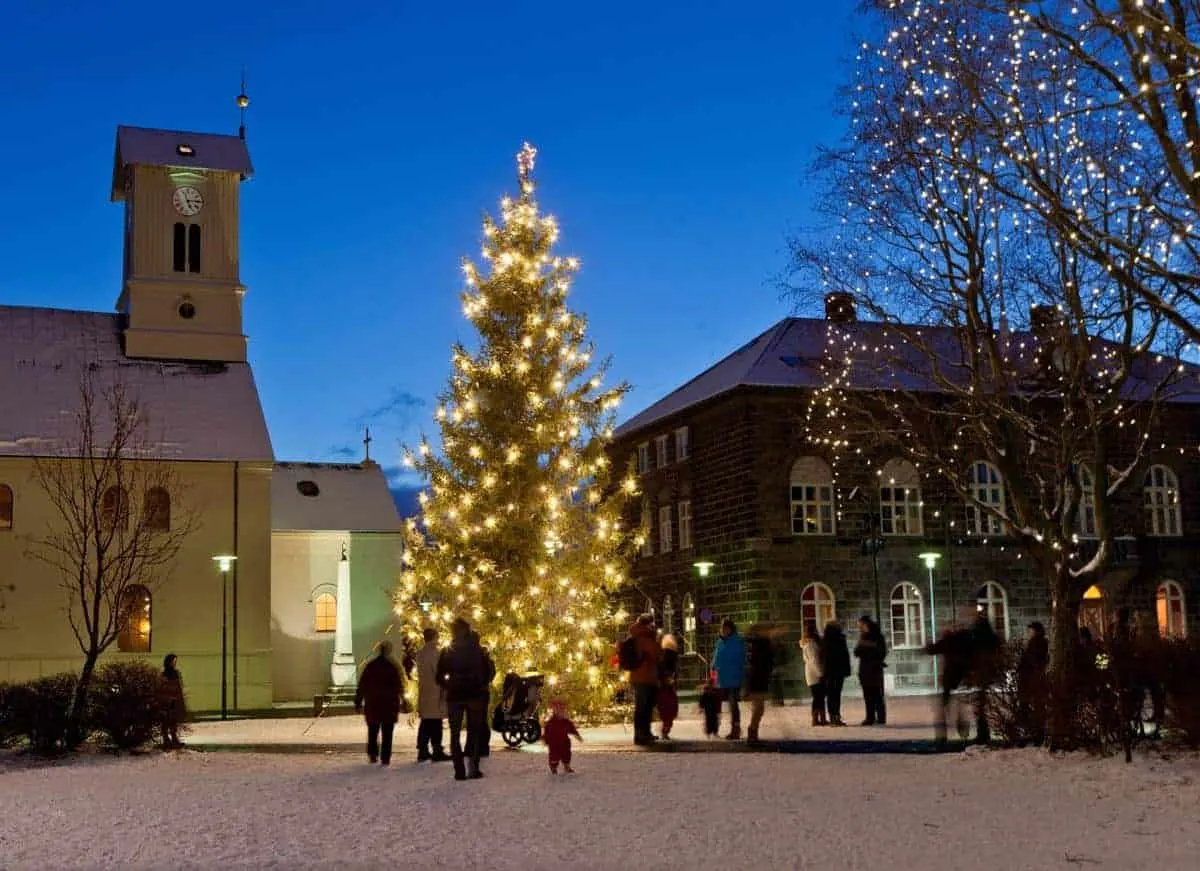
Meanwhile, Reykjavík handles winter better than most northern cities, mostly by leaning all the way into it. The lights go up in November and stay up into January, the pools run late, and you can walk the whole centre in twenty minutes.
Give it two evenings, one at each end of the trip. Hallgrímskirkja, the harbour and a swim at Sundhöllin will cover it — and the food scene has quietly become the reason a lot of people come back.
Driving Iceland in Winter
Still, self-driving is the best way to see Iceland and also the fastest way to ruin a trip, so let us be practical for a minute. Rental cars come on studded winter tyres through the cold months, but tyres do not help with the two things that actually close roads here: wind and ice.
Check two sites every single morning — we cannot stress this enough. Road.is shows live conditions, and a road marked red means closed, not “drive carefully”.
Vedur.is carries wind speeds and storm alerts, and Icelandic wind is in a category of its own. It rips car doors clean off their hinges, and that is a real claim your insurance probably excludes.
Every F-road and most mountain routes are shut for the season, so a winter itinerary sticks to the Ring Road and the paved spurs off it. Heading beyond the south coast? Register your plan with the SafeTravel app first.
Check | Where | What it means |
|---|---|---|
Road conditions | road.is | Red means closed, not “slow down” |
Weather and wind | vedur.is | Storm alerts, wind speed, avalanche warnings |
Aurora forecast | vedur.is | Activity plus the cloud-cover map that matters more |
F-roads | Closed all winter | Highland routes do not open until June |
Emergencies | 112 Iceland app | Registers your travel plan and calls for help |
Where to Stay in Iceland in Winter
In short, Reykjavík is the obvious base and the right one for a short trip. Everything on this page except the ice caves is a day trip from it, and when the weather turns you are walking distance from dinner rather than driving through it.
Doing the south coast? A night in Vík saves you the worst of the winter driving and puts the ice caves within reach in the morning, instead of at the end of a five-hour slog.
Good to Bring
Iceland is not as cold as people expect — it is far wetter and far windier, and that is what your packing list is really for.
- A packable waterproof shell — wind, not cold, is what gets you here
- Waterproof ski mittens — gloves lose to a Vík wind by day two
- Merino hiking socks — the crampons come with the tour, warm feet do not
- A lightweight tripod — no tripod, no aurora photograph, it is that simple
- A Bluetooth shutter remote — long exposures, and no shaking the camera
- A car phone mount — you will be navigating and watching the sky
- A sleep mask — for the guesthouse curtains that never quite close
⭐ Quick Picks
🌌 The reason to come: aurora over an empty road, with three or four nights booked so it is a chance rather than a gamble.
🧊 Best single day: a natural ice cave on Vatnajökull. It exists between November and March and at no other time.
🚗 Best drive: the south coast to Vík, started at first light because the light runs out at Reynisfjara.
♨️ Best cheap thing: the municipal pool in whatever town you are in. A few dollars, hot pots, and no tour bus.
🛒 One thing to buy: a tripod. Every aurora photograph you have ever admired was taken on one.
Iceland in Winter FAQs
Will I definitely see the northern lights?
No, and be a little suspicious of anyone who tells you otherwise. Four nights in the country in January gives you good odds; two nights in December is a coin flip.
How cold does it actually get?
Milder than you would think, in fact! Reykjavík hovers around freezing rather than far below it, thanks to the Gulf Stream. It is the wind that makes it feel brutal, not the thermometer.
Can I drive the Ring Road in winter?
Possible, but ambitious — and the north and east close far more often than the south. Most winter trips do Reykjavík, the Golden Circle and the south coast, and honestly that is the right call for a first visit.
When is the ice cave season?
November through March, with the caves at their most reliable in January and February. A warm, wet spell can close one overnight, so operators move between caves rather than cancel your day.
Is winter cheaper than summer?
Considerably, as long as you avoid Christmas and New Year. Flights, cars and rooms all drop between January and March, which is the cheapest window of the whole year.
Keep Exploring
Fancy more cold-weather trips? Have a look at the best winter cruises, Montenegro in winter, and the national parks that are better under snow.
And here is the wish list that started all of this for us: our own Iceland winter wish list.