
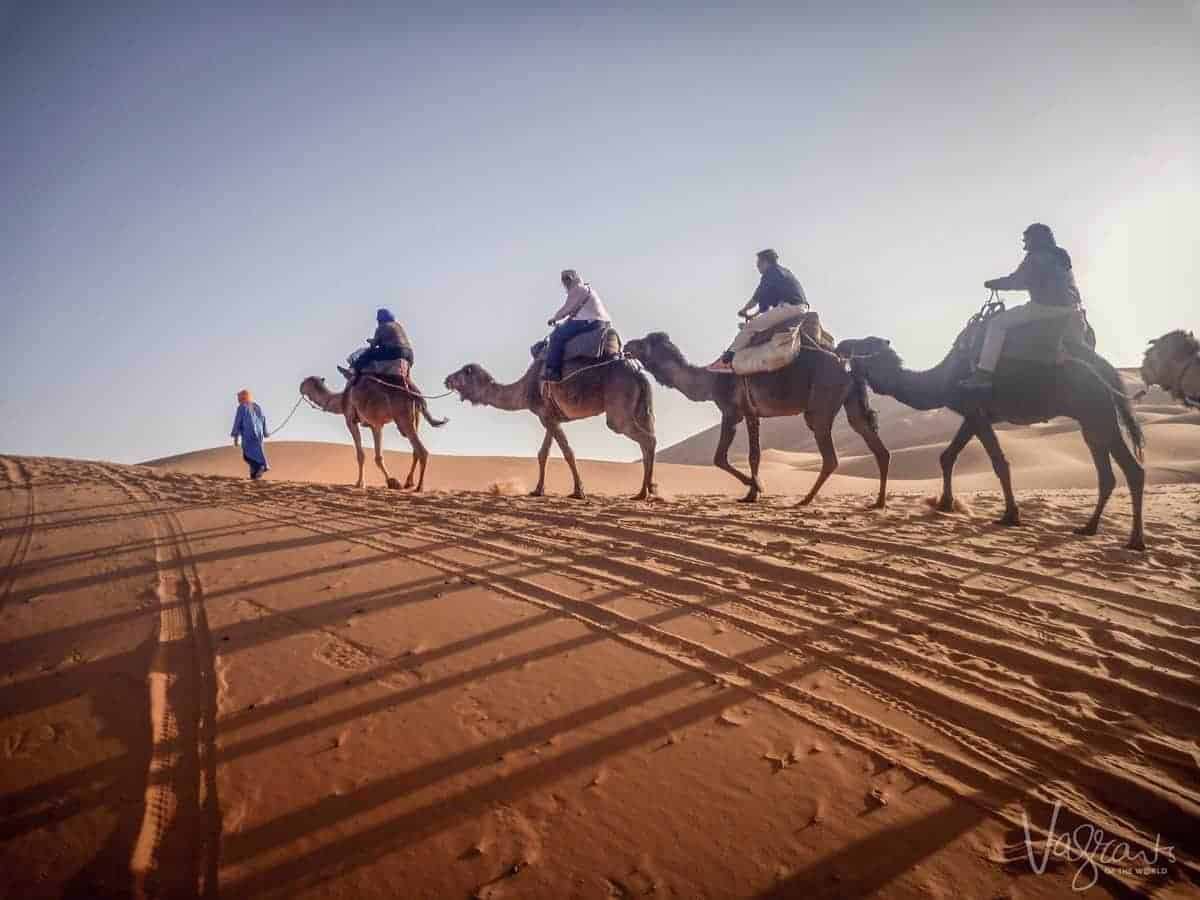
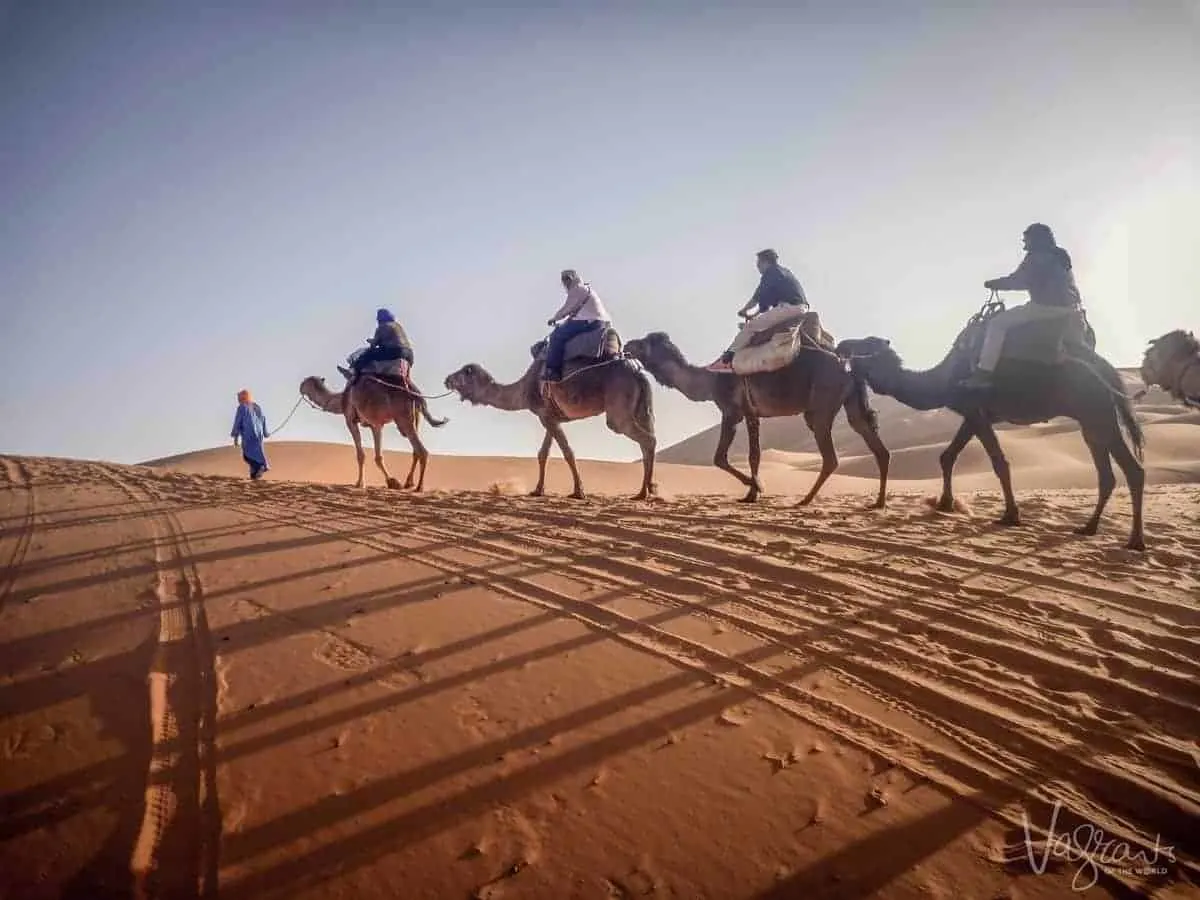
There is a moment, about forty minutes into camel trekking in Morocco, when the last of the road noise disappears and all you can hear is the animals’ feet in the sand. That is the thing you actually go to the Sahara for. Not the camel, and definitely not the photos — the silence.
The Sahara covers 9.4 million square kilometres and spills across most of North Africa, including Morocco’s entire eastern edge. But almost every desert tour you can book goes to one of just two dune seas: Erg Chebbi or Erg Chigaga. Choosing between them is the single decision that determines what kind of trip you get.
Here is how to pick, what the trekking is genuinely like, and what to take out on the camel with you — because you carry everything yourself.
Plan Your Sahara Desert Trip at a Glance
| The question | The short answer |
|---|---|
| Which dunes? | Erg Chebbi for accessibility and scale. Erg Chigaga to escape almost everyone. |
| How many days? | Three from Marrakech. Four if you want two nights in the desert. |
| Where do tours start? | Marrakech or Fez. The one-way Marrakech–Fez route wastes no driving. |
| How long on the camel? | Around 60–90 minutes each way. It is a transfer, not an endurance event. |
| Best months? | October to April. Summer in the Sahara is genuinely dangerous heat. |
| Bag size? | Tiny. You carry your own bag on the camel — leave the big one at the hotel. |
| ⭐ BuKoo Rating | ⭐⭐⭐⭐⭐ (5 out of 5) |
|---|---|
| 🔥 BuKoo Verdict | A bucket-list must-do |
| ⏱️ Time needed | 3–4 days from Marrakech |
| 💑 Best for | Couples, families and first-time Morocco travellers |
| 💶 Budget from | Around $90–$180 per person for a 3-day tour with desert camp |
Erg Chebbi or Erg Chigaga?
Erg Chebbi — the accessible one
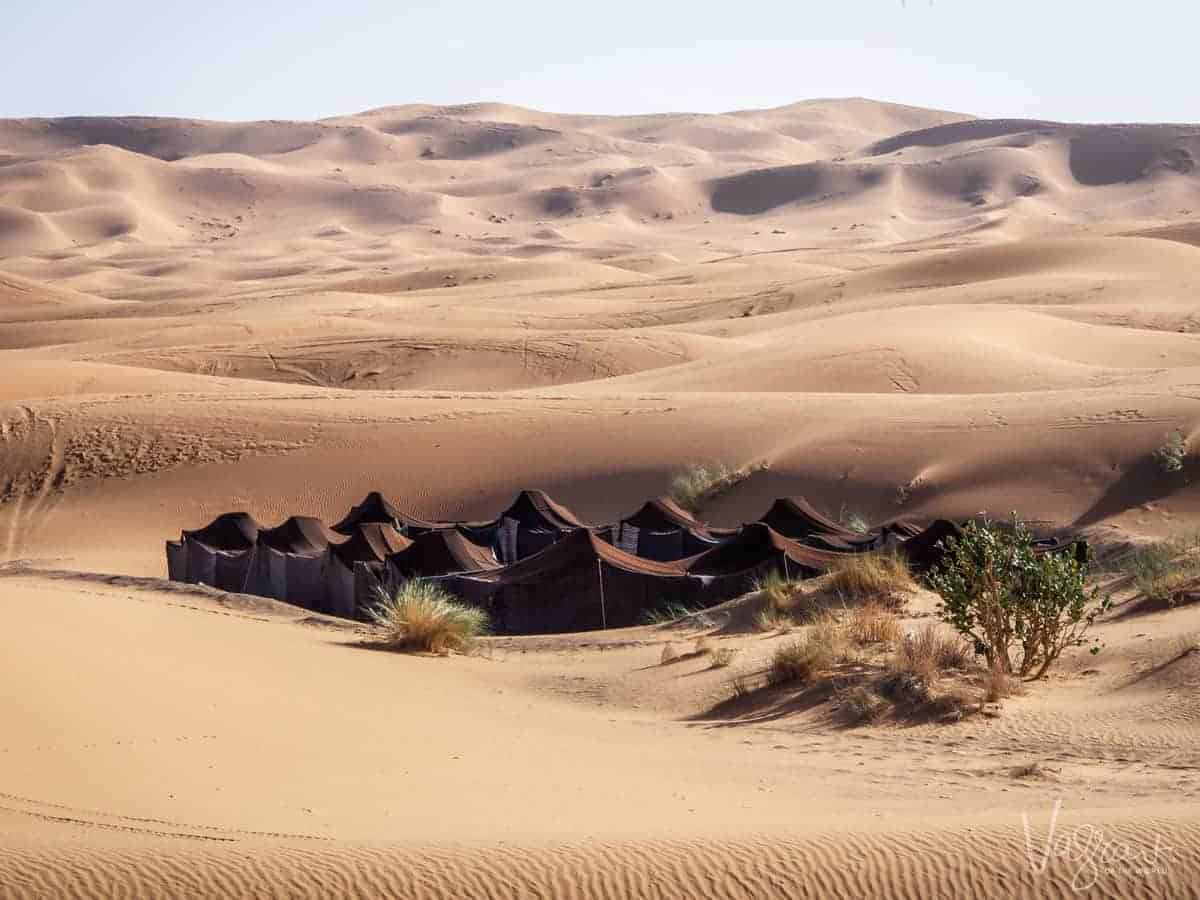
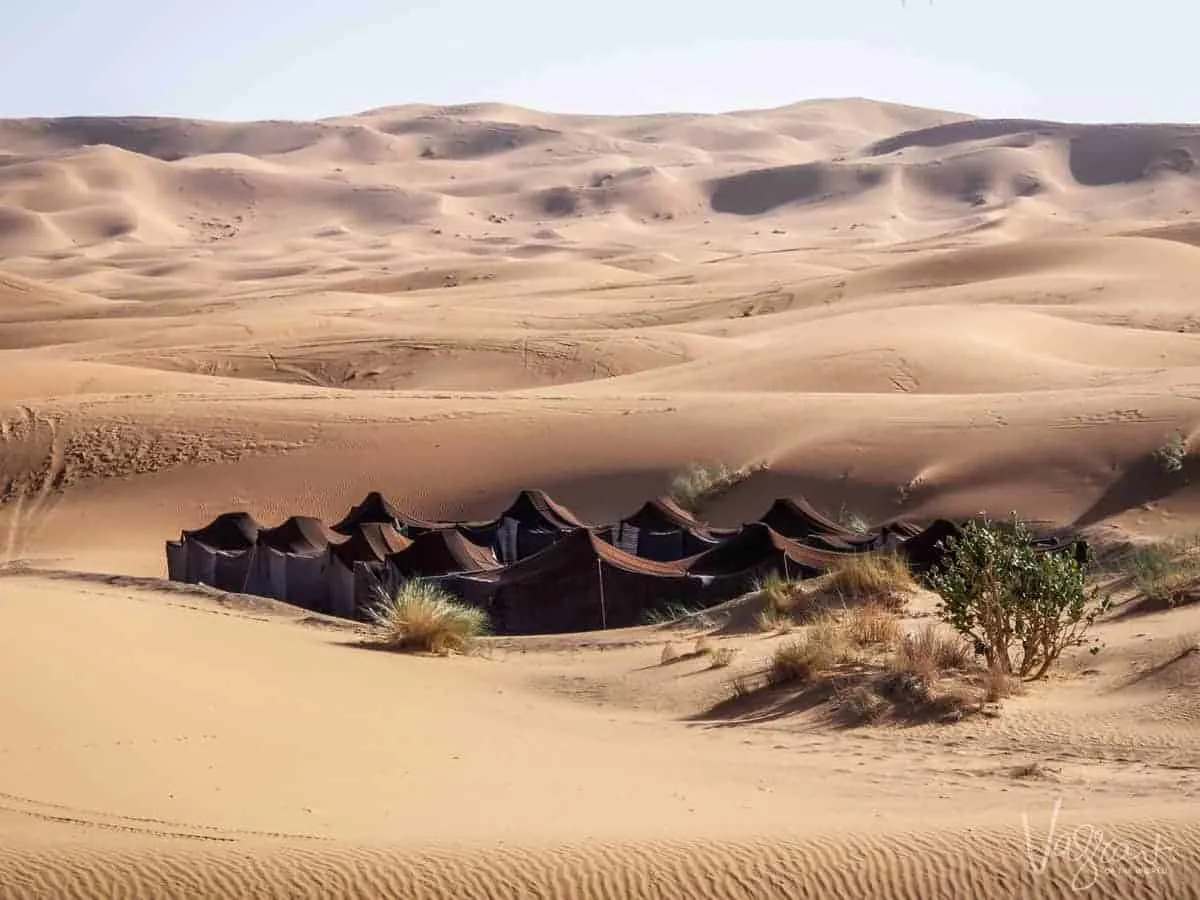
This is the postcard Sahara: dunes rising over 520 feet, and only about 30 km from the town of Merzouga, so you can drive almost to the sand. Of course, that accessibility is its strength and its weakness. Getting there is easy, camps range from basic to genuinely luxurious, and you will share the sunrise with other people.
Erg Chigaga — the remote one
By contrast, Erg Chigaga sits more than 60 km from the nearest road. Reaching it means a long 4×4 crossing, there are far fewer facilities, and the camps are more rustic. In exchange you get something closer to actual emptiness. If you have the extra day and you do not need a hot shower, this is the one.
🐧 BuKoo Tip: Almost everyone books Erg Chebbi, and that is genuinely the right call for a first trip — the dunes are bigger and the logistics are simpler. Save Chigaga for a second visit, when you know you like sleeping in sand.
Where Sahara Tours Start From
The two hubs are Marrakech and Fez, and both are a long way from the dunes — expect roughly 8–10 hours of driving each way, broken by stops. That drive is not dead time: it crosses the High Atlas over the Tizi n’Tichka pass and passes Ait Ben Haddou, the fortified earthen village you have seen in about a dozen films.
The smartest routing is one-way. Start in Marrakech and finish in Fez (or the reverse) and you never drive the same road twice.
What Camel Trekking in Morocco Is Actually Like
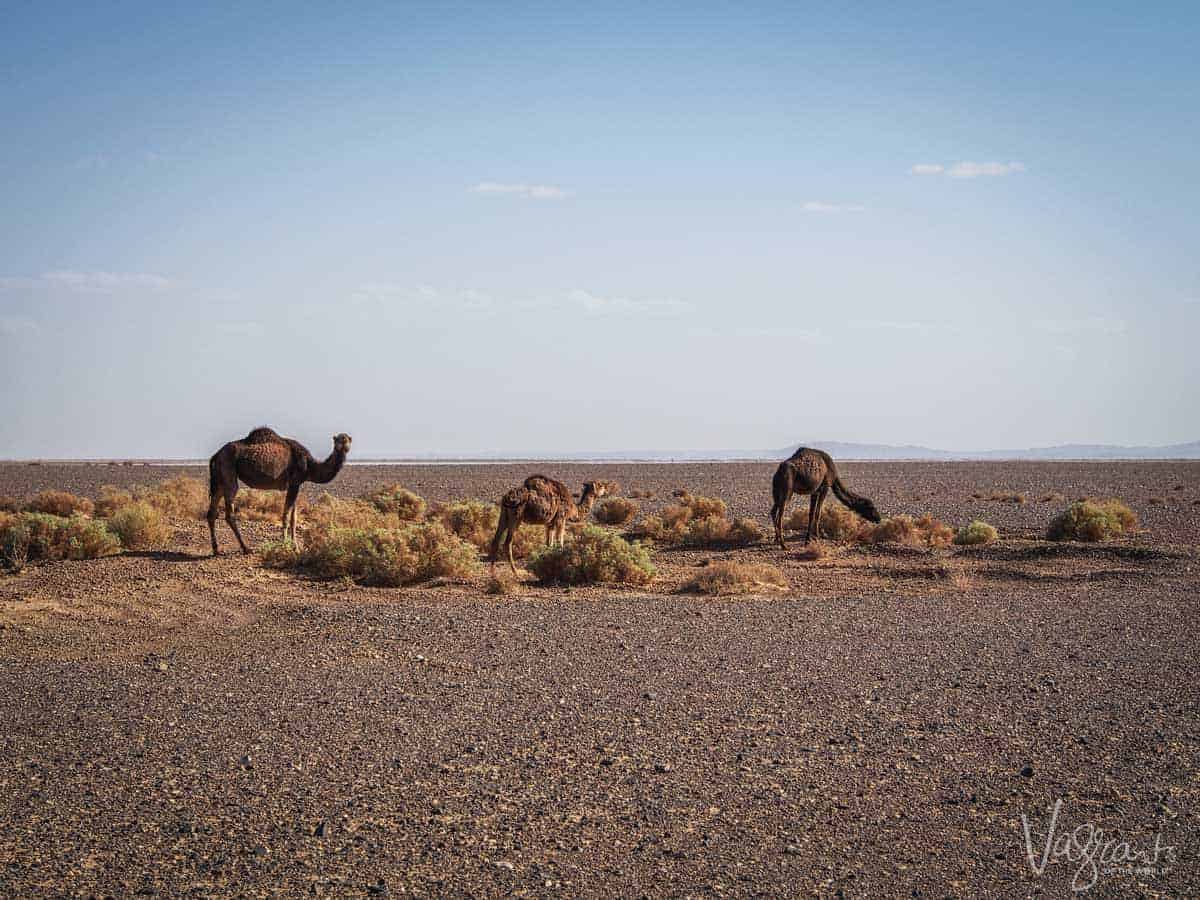
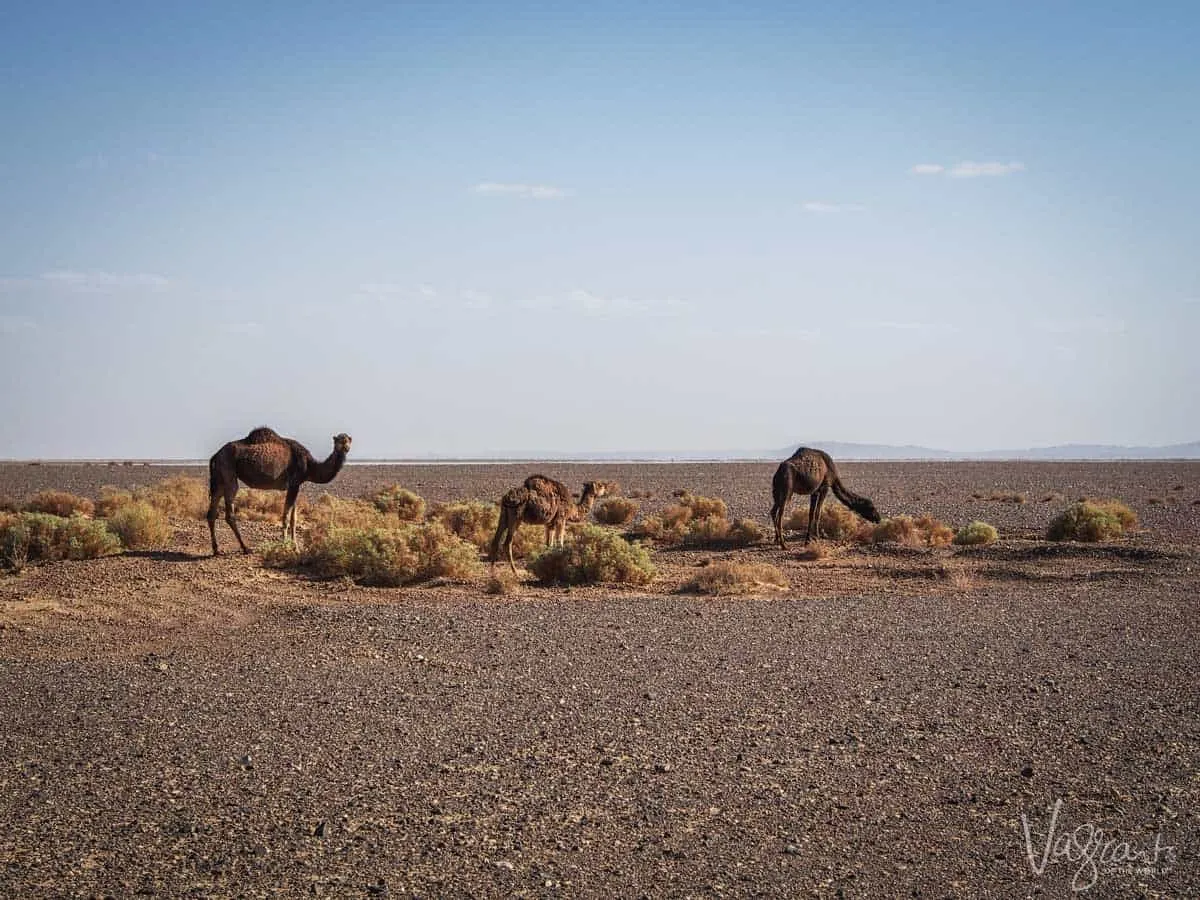
Manage your expectations here, in a good way. The camel trek is a transfer — roughly an hour to ninety minutes from the edge of the dunes to camp, timed so you arrive for sunset. It is not a multi-day caravan, and nobody expects you to have ridden before.
It is also, briefly, quite uncomfortable. Camels stand up back legs first, which pitches you forward at an alarming angle, and the gait takes some getting used to. Wear something you can spread your legs in, and hold the front of the saddle when the animal rises. Everyone wobbles the first time.
Pack Small — You Carry It Yourself
This trips people up constantly. When you arrive at the dunes you will be asked to take only what you need for one night, in a small bag, because it goes on the camel with you and there is not much room. Everything else stays in the vehicle or back at your hotel.
One night means: a change of clothes, warm layers, water, a headtorch, a camera and any medication. That is it. In practice, people who turn up with a full-size suitcase spend twenty minutes repacking on the sand in front of an audience.
🐧 BuKoo Tip: Take more water than feels necessary, and a scarf or shemagh. Wind-blown sand is the one genuinely unpleasant part of the desert, and a length of cotton over your face fixes it completely. You can buy one at almost any stop on the drive out.
The Night, and the Sunrise
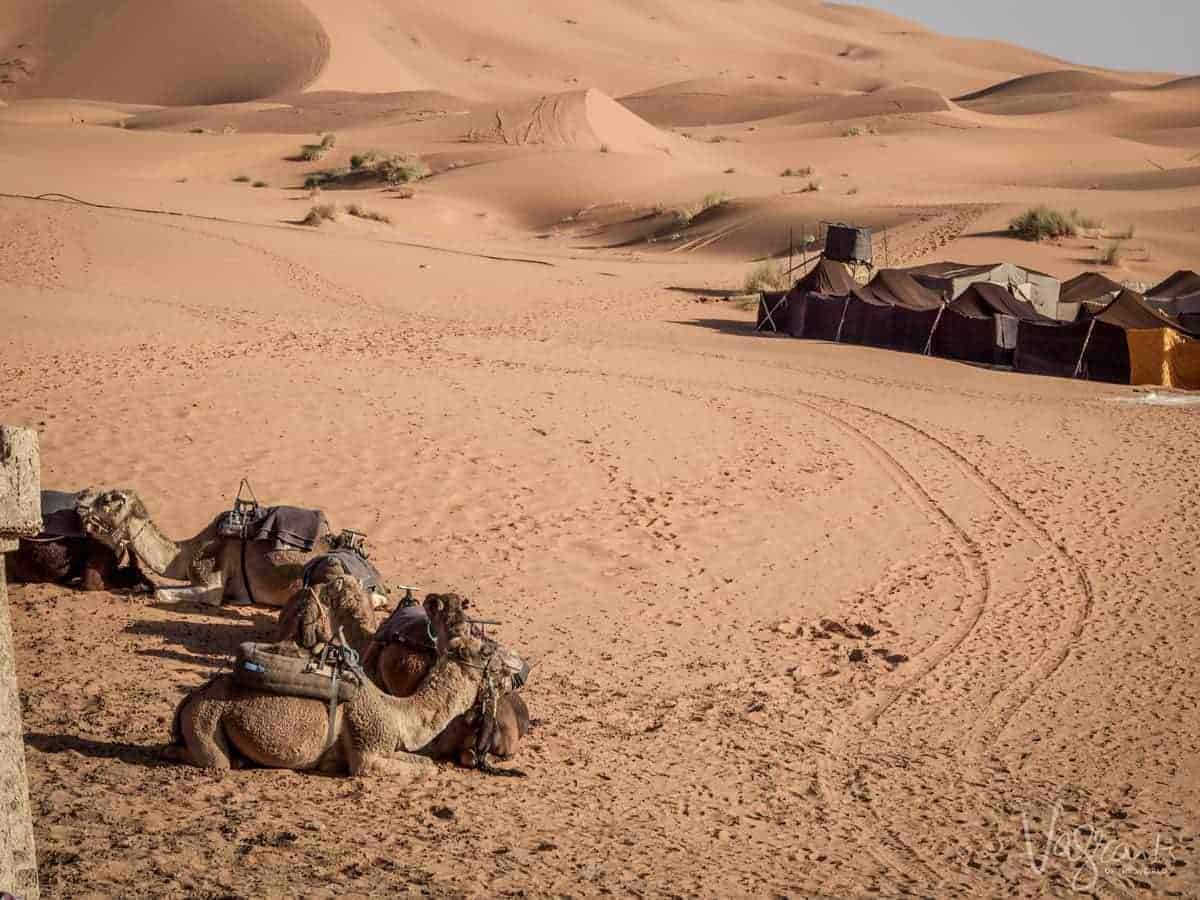
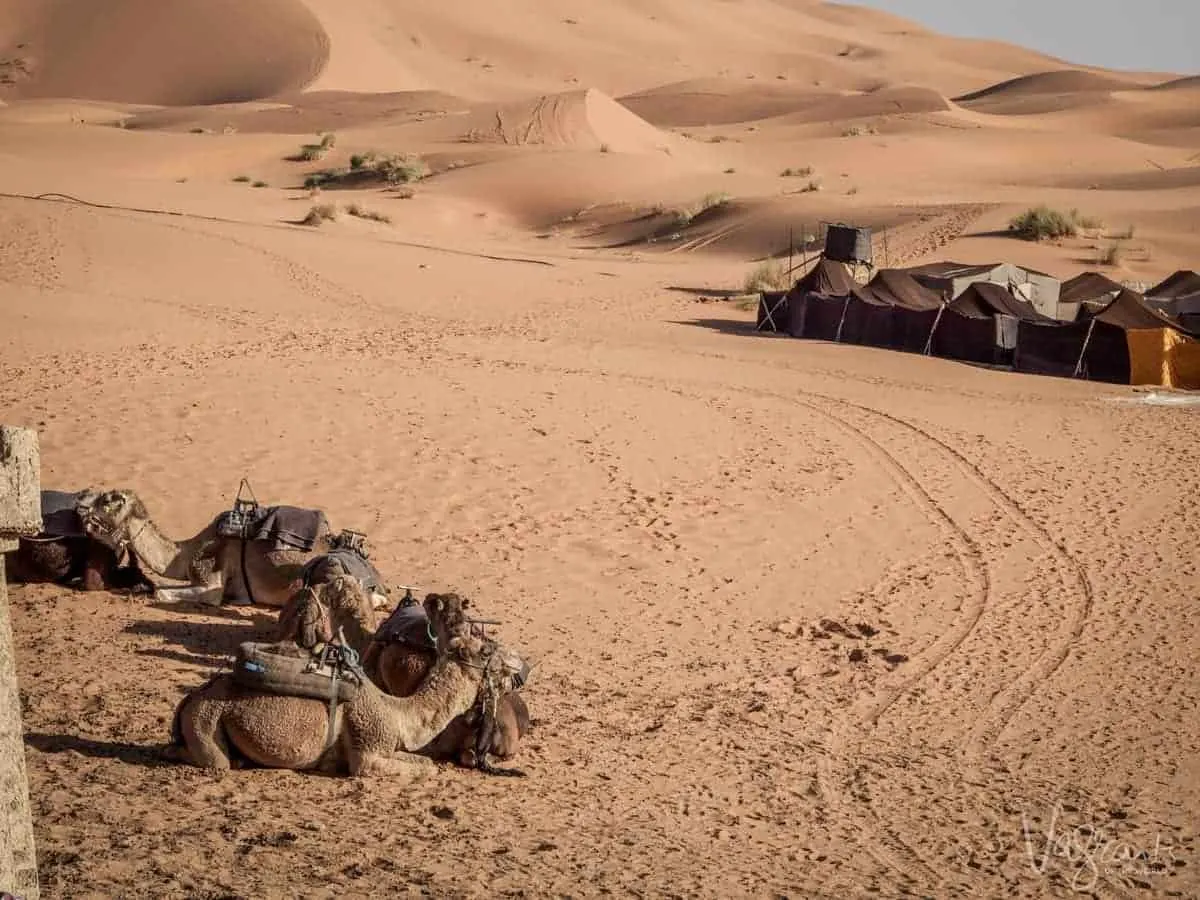
Camps are usually rugs and low tables under the stars, tagine for dinner, and drumming afterwards. However, the temperature drops hard once the sun goes down — even in spring you will want a fleece. What nobody prepares you for is the sky: with no settlement for a hundred kilometres, the Milky Way is bright enough to pick out the shape of the dunes.
Get up for sunrise. Then climb the dune behind camp in the dark, sit down, and wait. It is the best thing in the trip and it costs nothing.
When to Go
October to April, without much debate. Daytime temperatures are pleasant and the nights are cold but manageable with a fleece. Overall, spring and autumn are the sweet spots.
Avoid June to August. Saharan summer heat is not a discomfort to push through, it is a genuine health risk, and the middle of the day is unusable. Camps do run then, but you will not enjoy it.
What a Sahara Tour Costs
Cost | Roughly | Worth knowing |
|---|---|---|
3-day tour from Marrakech | $90–$180 each | Shared 4×4 or minibus, camp and most meals included. |
4-day, two nights in the desert | $160–$300 each | The upgrade worth paying for if you have the day. |
Overnight camel trek only | $35–$80 each | If you are already in Merzouga or driving yourself. |
Luxury desert camp | $120–$250 a night | Private tents, proper beds, en-suite bathrooms. |
Tips for guide and camel handler | $5–$15 | Expected, and it matters. Budget for it in cash. |
⭐ BuKoo Quick Picks
🐫 Best overall trip: the 3-day Marrakech to Merzouga tour — the right balance of driving, dunes and one night under the stars.
🌌 Worth the upgrade: two nights in the desert. The second night is when you stop taking photographs and actually sit still.
📅 Best months: October, November, March and April.
🔦 One thing to buy: a headtorch. Camp has no lighting to speak of, and you will want to climb a dune before dawn.
Good to Bring
Desert kit is about three things: sun, sand and the cold at night. Everything below fits in the small bag you take out on the camel.
🔦 A rechargeable headlamp — camp is unlit, and you will want both hands on a dune at 5am.
🧣 A large cotton travel scarf — sun on the neck by day, over the face in wind, extra layer at night.
🧢 A wide-brim sun hat — there is no shade anywhere in a dune field. None.
🧴 High-factor sunscreen — sand reflects, so you burn from below as well as above.
💧 A collapsible water bottle — packs flat for the drive, and you carry your own water on the camel.
🔋 A USB-C power bank — there is no power at most camps, and cold nights flatten phone batteries fast.
📷 A roll-top dry bag — not for water. For sand, which gets into cameras and never fully leaves.
🩹 A compact first aid kit — blister plasters and rehydration salts especially.
Keep Exploring
🐫 Our full Sahara desert tour walkthrough — the hour-by-hour detail and complete packing list behind this plan.
🇲🇦 Morocco Adventure: Medinas, Mountains and the Sahara — how the desert fits into a wider two-week trip.
🧳 Complete Packing List for Morocco — including what to wear and what to leave at home.
📚 Best Books About Morocco — for the long drive across the Atlas.
🏜️ Useful Travel Tips for Marrakech — for the days either side of the desert.
🏰 On the drive out you pass Ait Ben Haddou, a UNESCO World Heritage Site and one of the best-preserved earthen ksour in southern Morocco. Do not sleep through it.