
A Christmas market river cruise solves the problem that makes market-hopping exhausting: you sleep in the same bed every night and your hotel moves while you do. Wake up in a new medieval town, walk five minutes off the boat into its market, come back for dinner.
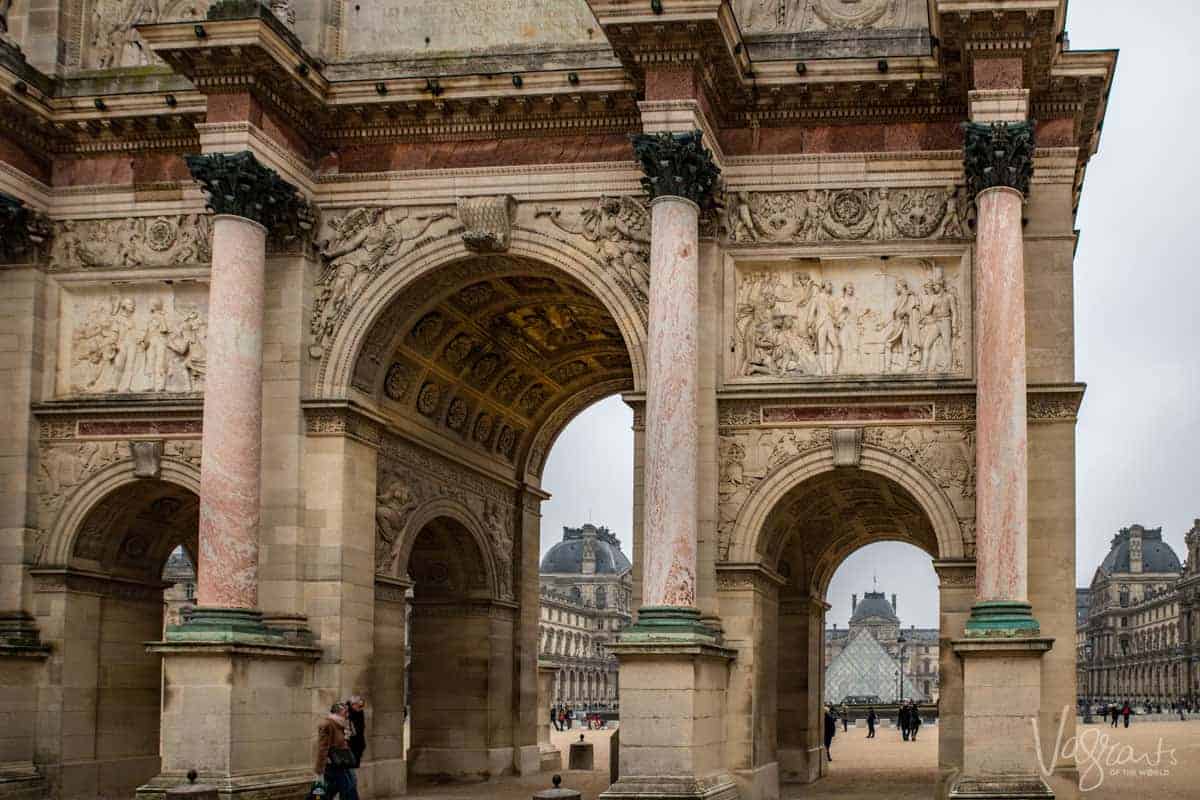
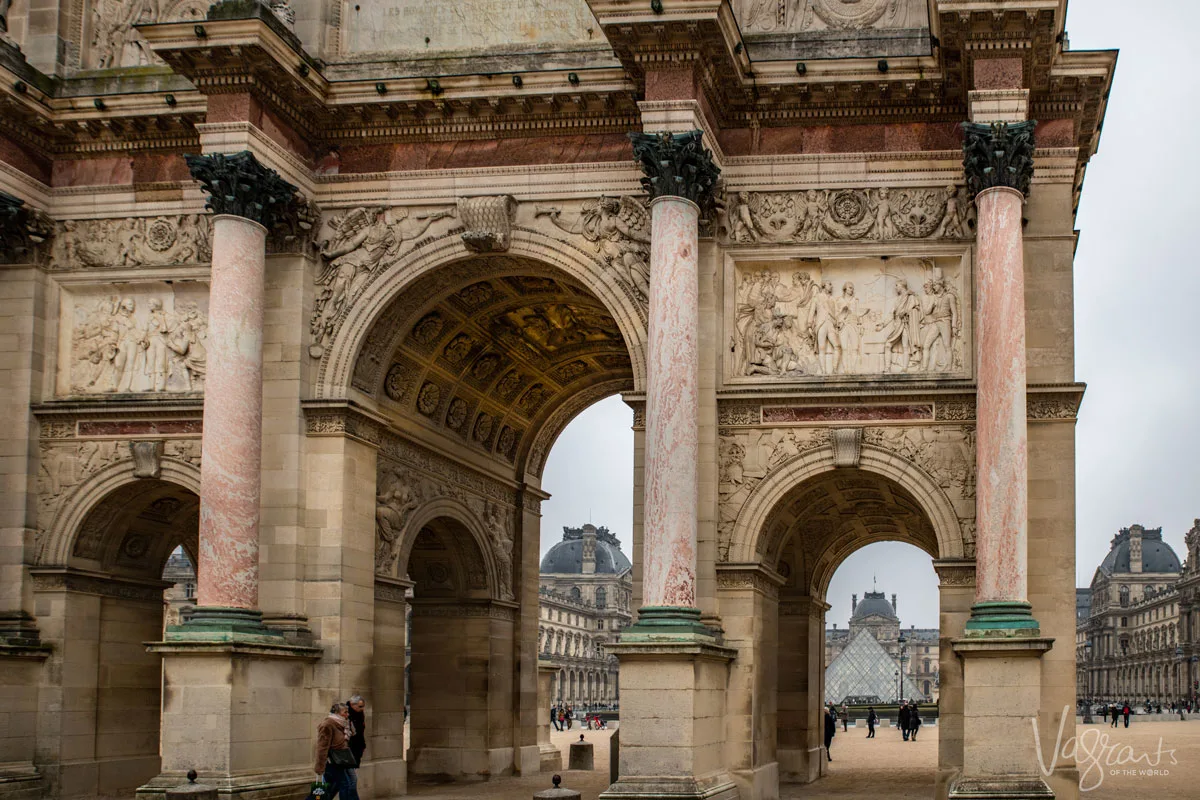
We did the Paris-to-Swiss-Alps run — Paris, Luxembourg, Trier, Bernkastel, Cochem, Koblenz, the Middle Rhine, Mainz, Speyer, Strasbourg, Basel and Zurich — which strings together some of the oldest markets in Europe along the Moselle and the Rhine. Here is what you actually want from each stop.
Here is what these cruises actually cost, what you get and do not get, and which stops are worth the shore excursion money.
Plan Your Christmas Market Cruise at a Glance
| Christmas Market River Cruise | |
|---|---|
| ⏱️ Typical length | 8–15 days; the Paris–Swiss Alps run is about two weeks |
| 📅 Season | Mid-November to just before Christmas — markets close on 23 December |
| 🚢 Rivers | Moselle and Rhine for the classic run; Danube for Vienna, Budapest and Bratislava |
| 💶 Budget from | ~USD $3,500–6,000 per person including flights and most meals |
| 🌡️ Weather | 0–7°C, damp, dark by 4.30pm — which is when the markets look best |
| 💑 Best for | First-time market visitors, and anyone who hates packing twice |
| ⭐ BuKoo Rating | ⭐⭐⭐⭐⭐ (5 out of 5) |
|---|---|
| 🔥 BuKoo Verdict | A bucket-list must-do |
Are Christmas Cruises More Expensive?
Slightly, but less than you would think. Christmas market sailings are shoulder season for the river lines — the ships are the same, the crowds are lighter than summer, and the fares often come in below the July equivalents. What pushes the price up is the flights, because you are travelling into the busiest fortnight of the European year.
What is included is usually the cabin, all meals aboard, wine and beer with lunch and dinner, and one shore excursion in each port. What is not: flights, tips, the better excursions, and everything you buy at the markets — which, with glühwein at every stall, is more than you plan for.
🐧 BuKoo Tip: Book the cabin one deck up, not the suite. On a Christmas sailing you are ashore all afternoon and in the lounge after dark — the balcony you paid for is unusable in December. Spend the difference on the paid excursions in Trier and Strasbourg instead, which are the two that genuinely need a guide.
Paris and Luxembourg: the Start
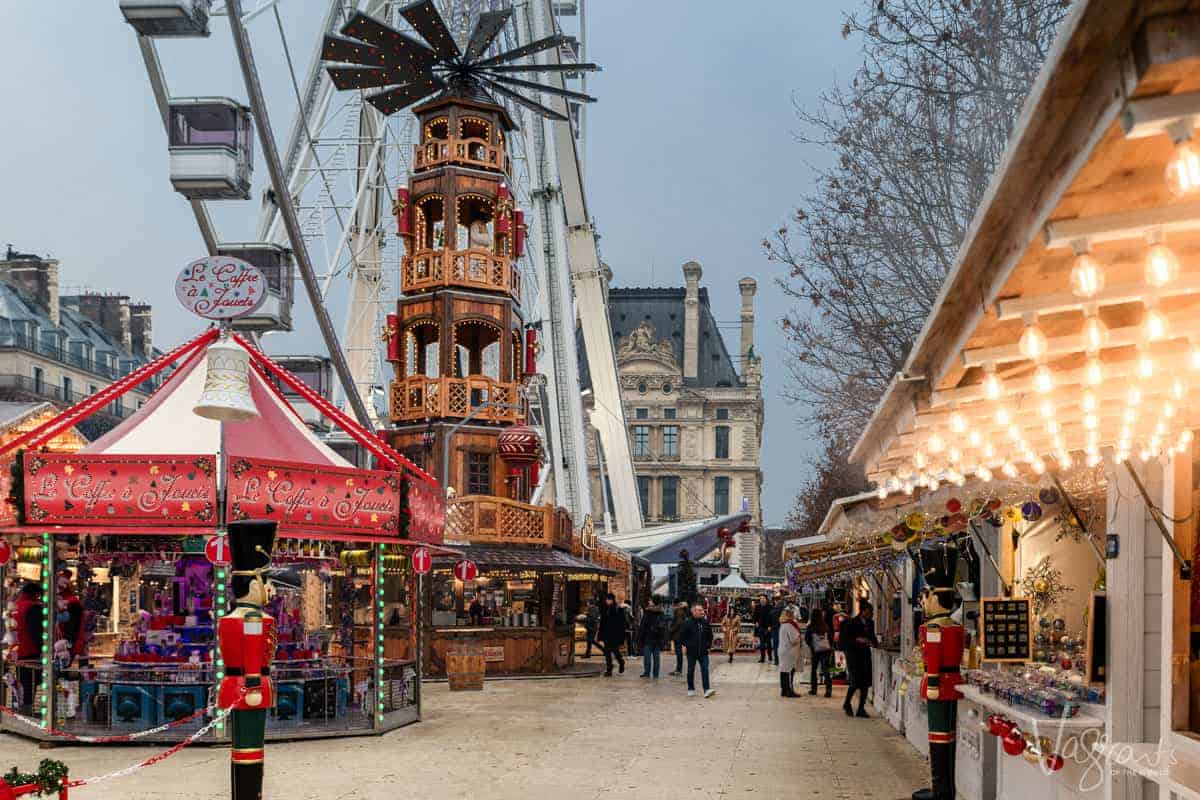
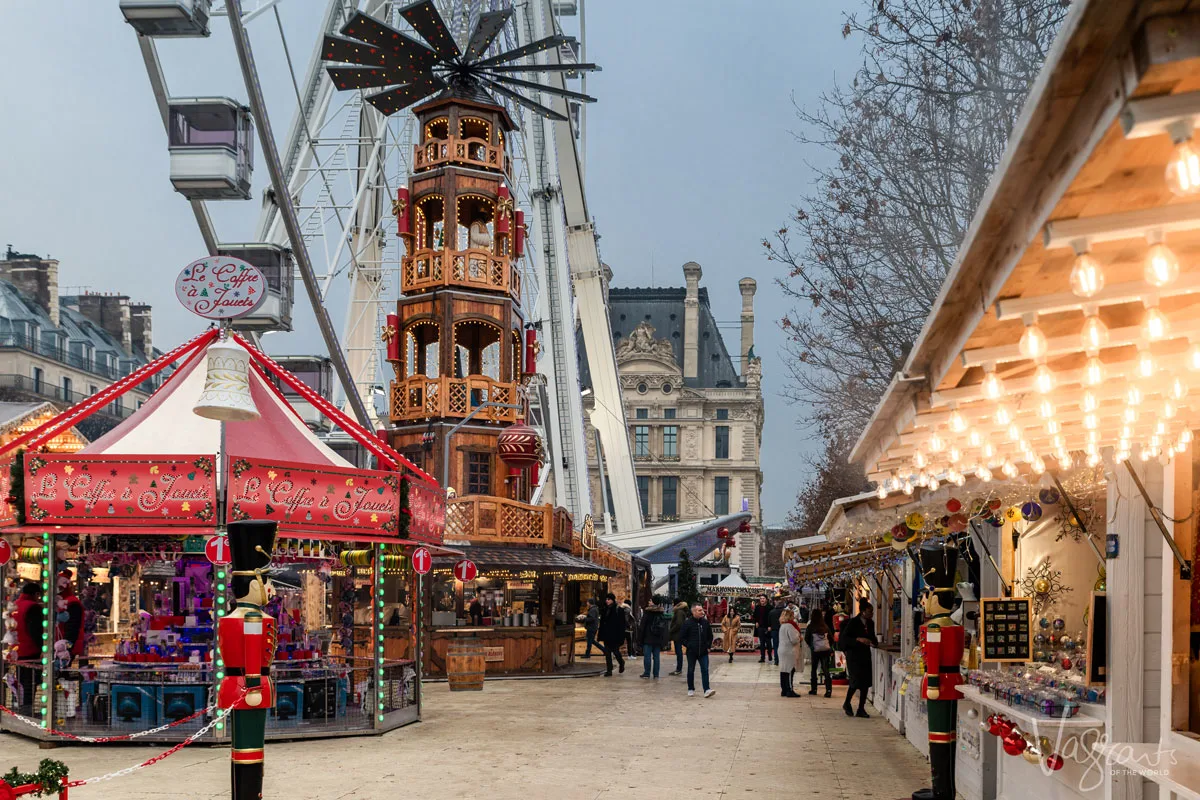
Most of these itineraries give you a couple of nights in Paris before the ship. The Champs-Élysées lights and the market at the Tuileries are your free version; a Christmas lights tuk-tuk tour is how you see all of it in an evening without walking eight kilometres in the cold.
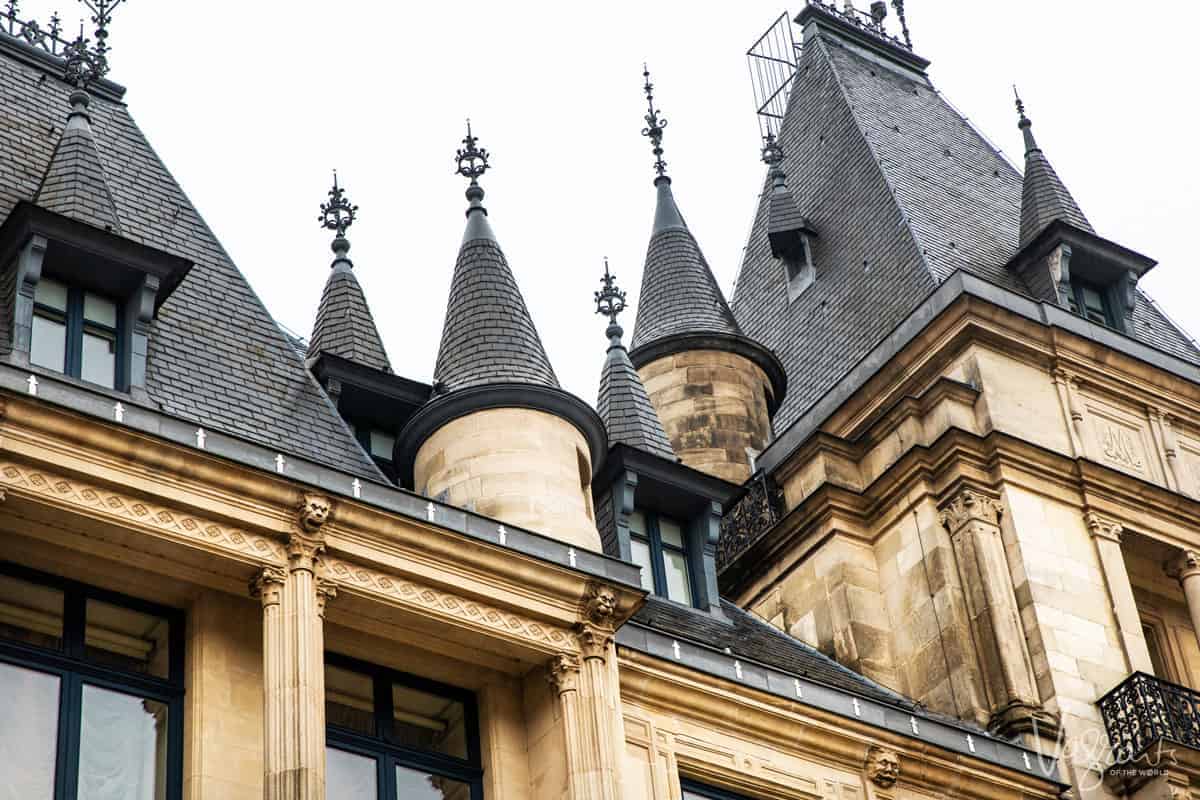
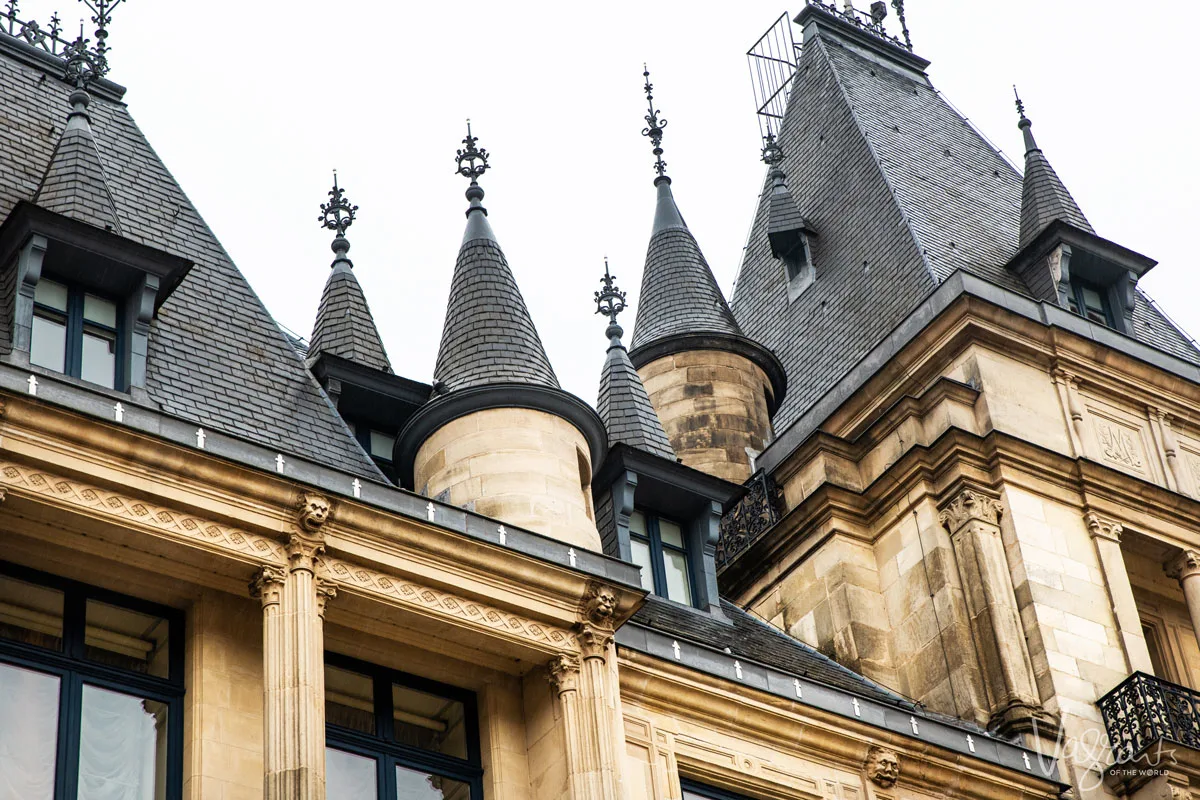
Luxembourg City is the stop you will not expect to love — a UNESCO-listed old quarter built on a gorge, with the Wintérlights markets spread across four squares. Compact, walkable, and far less visited than the German stops.
The Moselle: Trier, Bernkastel and Cochem
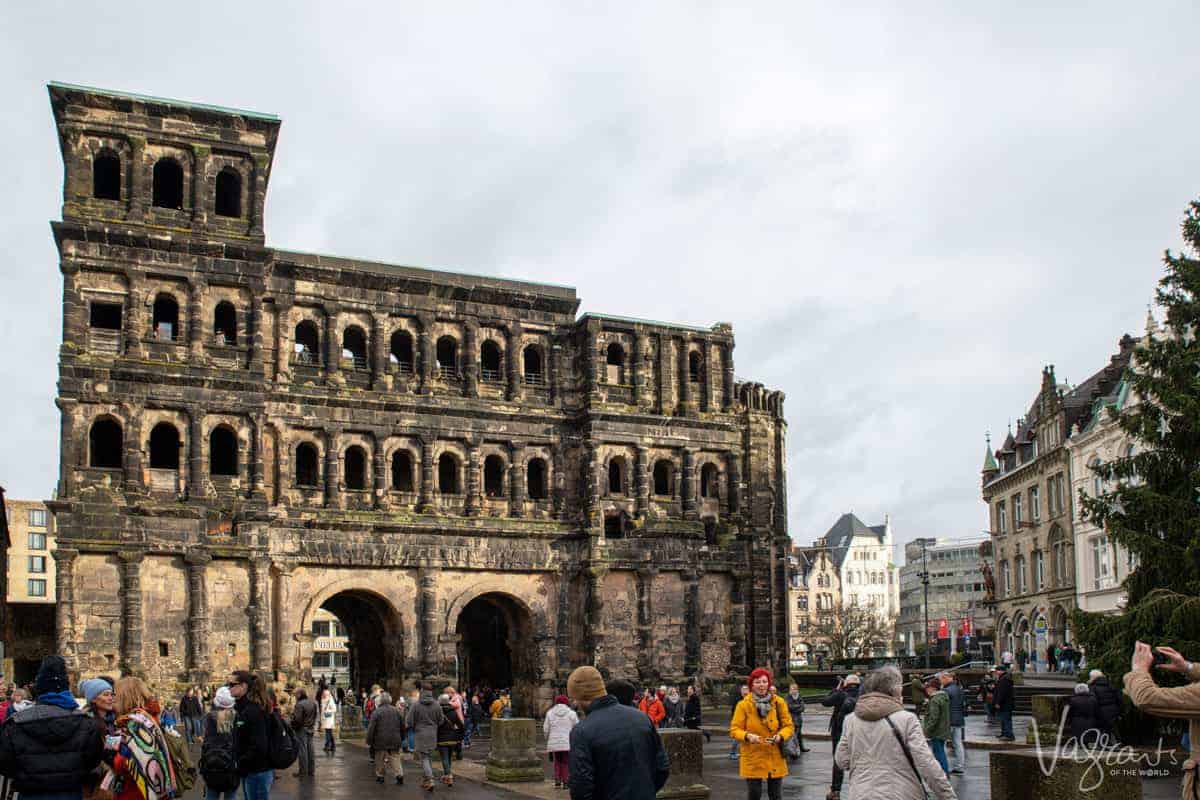
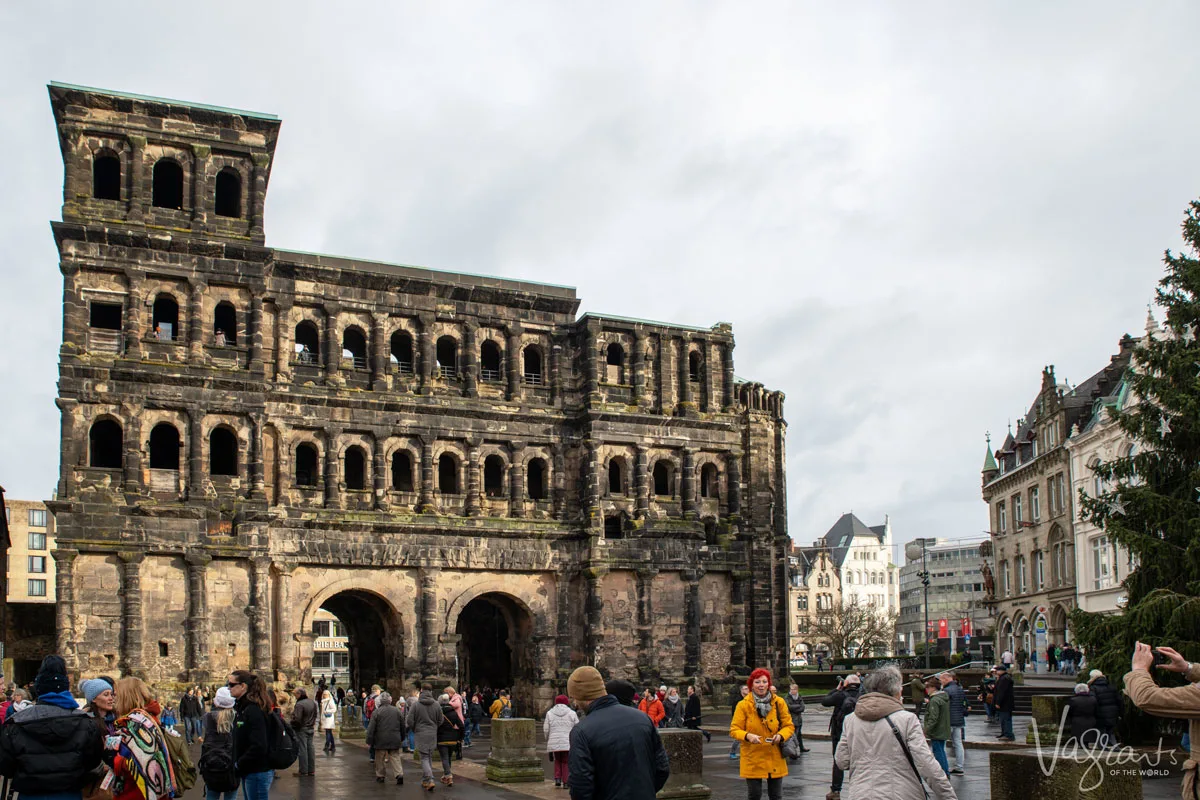
Trier is the oldest city in Germany and has the Roman ruins to prove it — the Porta Nigra, an amphitheatre, imperial baths — with the Christmas market laid out beneath them in the main square. A guided walk of the old town is the excursion worth your money here, because the Roman layer is invisible without one.
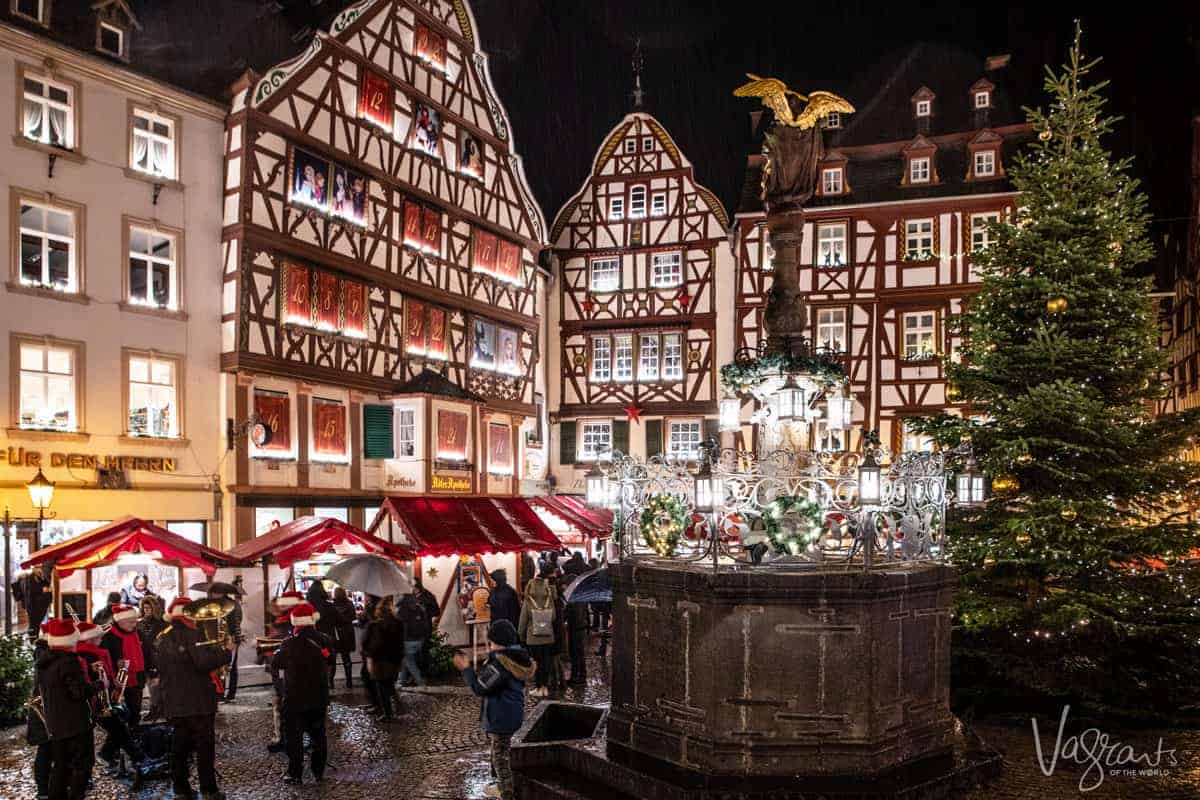
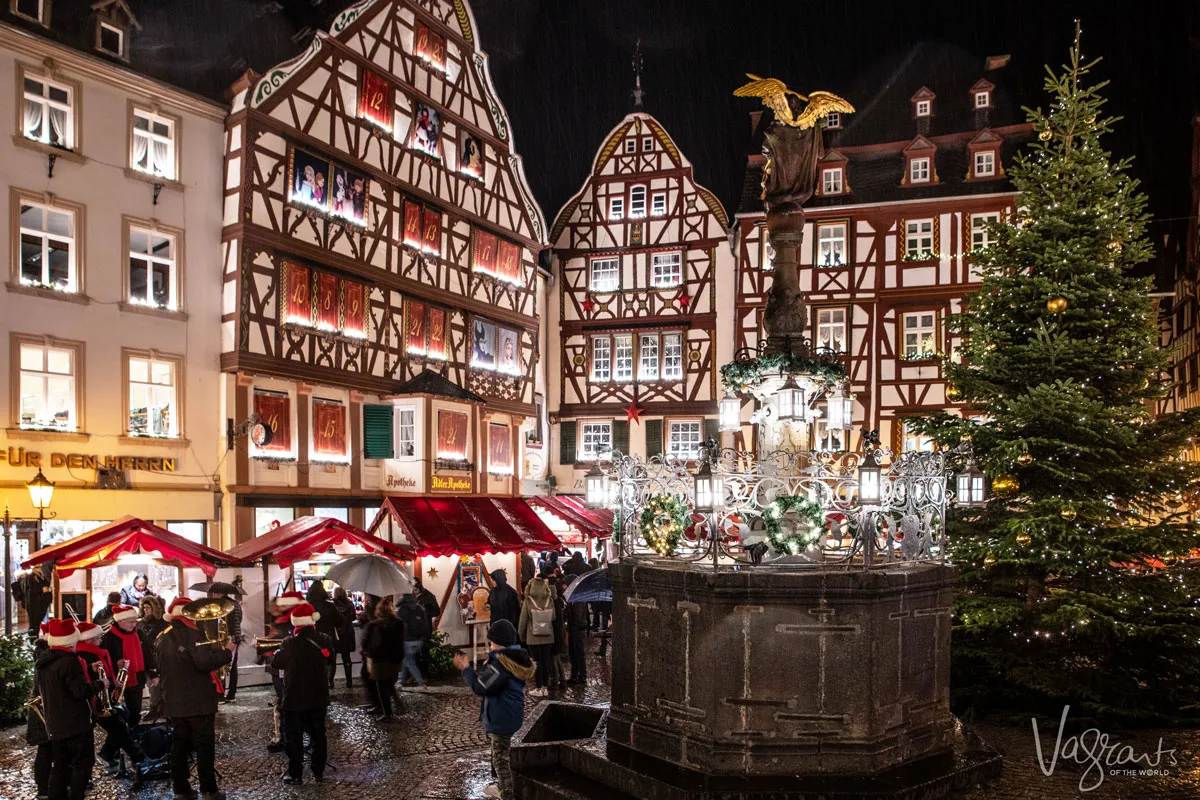
Bernkastel is your picture-book stop — timbered houses leaning over a market square barely bigger than a tennis court, vineyards straight up the hill behind. You can do it in ninety minutes, and it is better than that sounds.
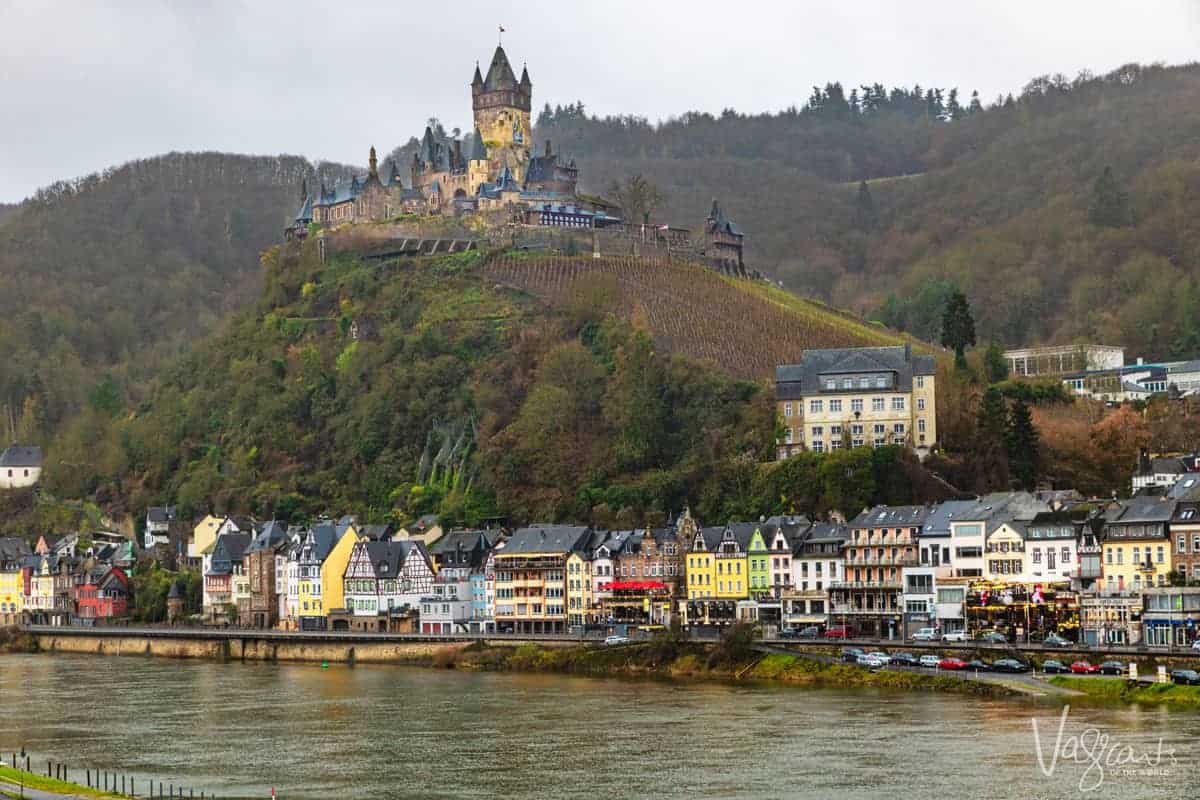
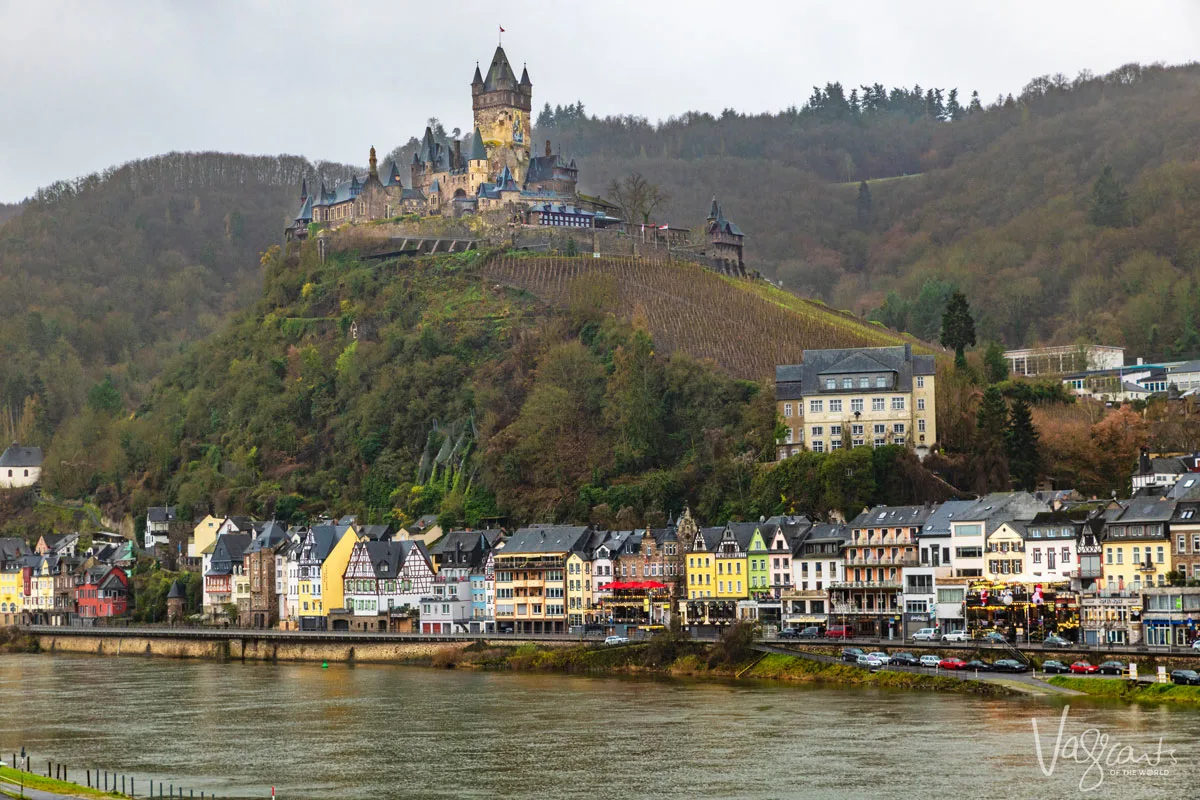
Cochem has the castle on the crag above the river and the best Moselle wine of the trip. A castle, boat and wine tour covers all three, or a self-paced Moselle tasting if you would rather not be herded.
The Rhine, Strasbourg and Switzerland
The Middle Rhine sailing day is the one nobody books an excursion for and everybody remembers — 65 km of castle after castle through a UNESCO-listed gorge, watched from the top deck with something hot in your hands. Dress for it; the wind on the water is worse than the temperature suggests.
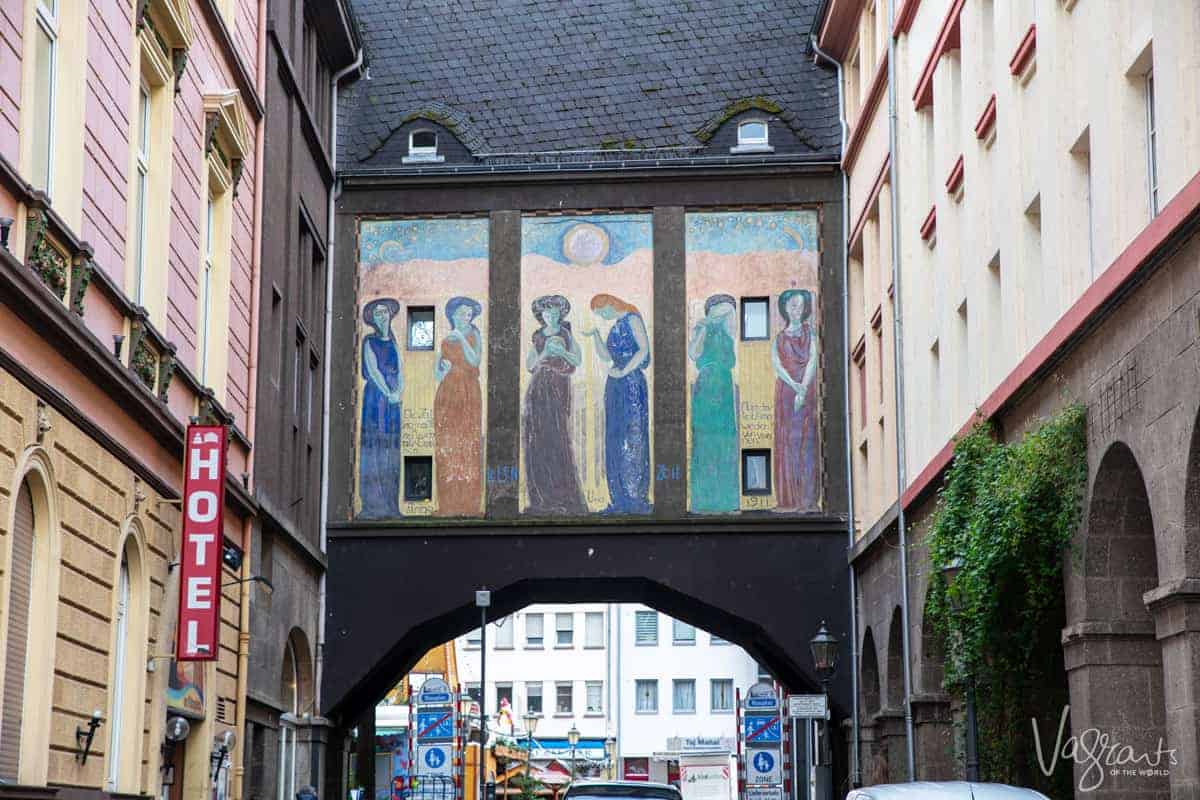
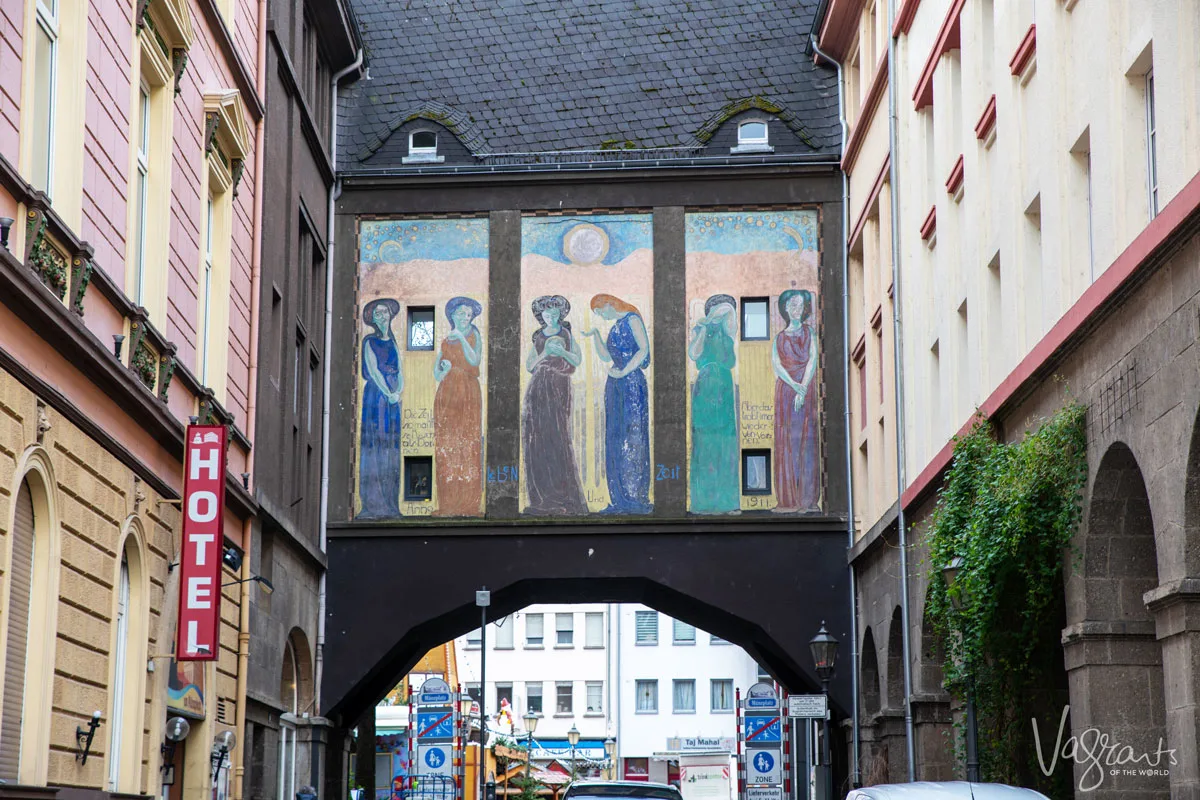
Strasbourg calls itself the Capital of Christmas and has the receipts — its market has run since 1570, and the UNESCO-listed Grande Île fills with a dozen separate markets. A guided Christmas market tour is genuinely useful to you here, because the markets are scattered and the crowds are heavy.
From Basel, the day trip to Colmar and Ribeauvillé is the best optional excursion on the whole itinerary — Colmar’s old town is the one that looks like an animation cell, and Ribeauvillé runs a medieval market with no electricity in it. And a Zurich city tour with a lake cruise and chocolate gives you a soft landing on the last day.
Estimated Costs
| What | Roughly |
|---|---|
| Two-week Paris–Swiss Alps cruise, per person | USD $3,500–6,000 depending on cabin and line |
| Optional shore excursion | USD $60–120 each |
| Glühwein at a German market | €4–6, plus a €3–5 refundable mug deposit |
| Bratwurst or flammkuchen | €5–9 |
| Pre-cruise night in Paris | €180–350 |
| Post-cruise night in Zurich | CHF 200–350 |
| Tips, two weeks | ~USD $200–300 per person, often not included |
⭐ BuKoo Quick Picks
🍷 Best paid excursion: Colmar and Ribeauvillé from Basel. Two markets, one medieval and candlelit, and the prettiest old town on the route.
🏛️ Best value guide: the Trier walking tour — the Roman city is invisible without one.
🎄 Do not skip: the Strasbourg market tour. Twelve markets across an island, and finding them alone eats the afternoon.
⛴️ Free and the best day: the Middle Rhine sailing. Stay on deck with a hot drink and do not book anything.
Good to Bring on a Christmas Market Cruise
You are outdoors in the cold for four or five hours a day and back on a warm ship by six. Layers you can shed indoors matter more than one heavy coat.
🧦 Merino glove liners — thin enough to hold a glühwein mug and take photos, warm even when damp.
☂️ A windproof compact umbrella — the Rhine valley in December is rain more often than snow.
🌧️ A packable hooded poncho — goes over the coat and the day bag, and lives in a pocket the rest of the time.
🔌 A European travel adapter — the ship’s cabins are Type C and F, and there are never enough sockets.
👜 A small crossbody bag beats a backpack in a market crowd, and a foldable tote is worth its space for everything you will buy.
Where to Stay Either End
Nearly every one of these itineraries wants a night in Paris before you board and a night in Zurich or Basel after. Give both an extra day rather than a rushed transfer — and December hotel rates in Zurich are far kinder to you than the city’s summer reputation suggests.
Christmas Market Cruises: Your Questions Answered
When is the best time to take a Christmas market river cruise?
The first three weeks of December. Markets generally open in the last week of November and most close on 23 December, so a sailing that ends before the 22nd puts you in front of every market. Late November sailings are quieter and slightly cheaper, but a few markets will not have started.
Are Christmas market cruises worth the money?
If you want six to ten markets without changing hotels, yes. If you want to spend real time in two or three cities, a train pass and three hotels will cost less and give you longer in each. The cruise buys convenience and a warm base, not depth.
Which river has the best Christmas markets?
The Rhine and Moselle for the classic German and French markets — Cologne, Strasbourg, Trier, Cochem. The Danube for Vienna, Budapest, Bratislava and Regensburg, which is the better choice if you have already done the Rhine.
How cold does it get?
Around freezing to 7°C, damp rather than dry cold, and dark by half past four. That last part is a feature — the markets look their best under lights, and you will be out in them by mid-afternoon.
Do you need to book shore excursions in advance?
The included ones, no. The optional ones sell out on a full ship, especially Colmar from Basel — book those the day your booking window opens.
Keep Exploring
More Christmas and winter, from the road:
🎄 BuKoo’s European Christmas markets guide — the same markets, done independently by train.
🚢 Our full Paris-to-Swiss-Alps cruise review — the day-by-day original, with the ship details this guide skips.
❄️ 21 unique things to do in Europe in winter — for the weeks either side of the markets.