
Autumn is the one subject that flatters bad photography just enough to be frustrating. The colour is so good that every snap looks fine — and almost none of them look like what you actually stood in front of. That gap is nearly always light, timing and one filter.
This is the working version: when to be there, what to actually carry, the settings that hold up, and the five compositions that will do the heavy lifting for you. No gear-review filler.
If you are still choosing where to point the camera, our Fall Travel 2026 guide and the East Coast foliage road trip cover the routes.
Plan Your Fall Foliage Photography at a Glance
The Shot | Best Light | Starting Settings | What Makes It |
|---|---|---|---|
Backlit canopy | Low sun behind the leaves | f/8 · 1/250 · ISO 200 | Shoot into the light, expose for the leaves |
Reflections in still water | First hour after dawn | f/11 · 1/60 · ISO 100 · tripod | Polariser OFF — you want the reflection |
Wide valley overlook | Golden hour, side light | f/11 · 1/125 · ISO 100 | Polariser ON, foreground rock or branch |
Forest interior | Overcast or after rain | f/5.6 · 1/60 · ISO 400 | No sky in frame. Wet bark saturates |
Single leaf / detail | Open shade | f/2.8 · 1/200 · ISO 400 | Get low, shoot up, blow the background out |
Misty river at dawn | 20 minutes before sunrise | f/11 · 2 sec · ISO 100 · tripod | Cold night after a warm day makes the mist |
| ⏱️ Time needed | 3–4 days to shoot one region properly |
| 💶 Budget from | ~$150 a day, plus one filter you should already own |
| 💑 Best for | Anyone who has come home disappointed with their autumn photos |
| ⭐ BuKoo Rating | ⭐⭐⭐⭐⭐ (5 out of 5) |
| 🔥 BuKoo Verdict | A must-do skill, not a gear problem |
🐧 BuKoo Tip: If you take one thing from this: a circular polariser is worth more than a better camera for autumn. It kills the white glare sitting on every waxy leaf, and underneath that glare is the saturation you thought your camera was missing. Rotate it while looking through the viewfinder — you will see the colour arrive.
Getting the Timing Right
Peak lasts about ten days in any one spot, and the forecasts are better than you think. New Hampshire and Vermont both publish weekly reports written by state foresters, and Algonquin updates twice a week. Check them the week before you go, not the month before.
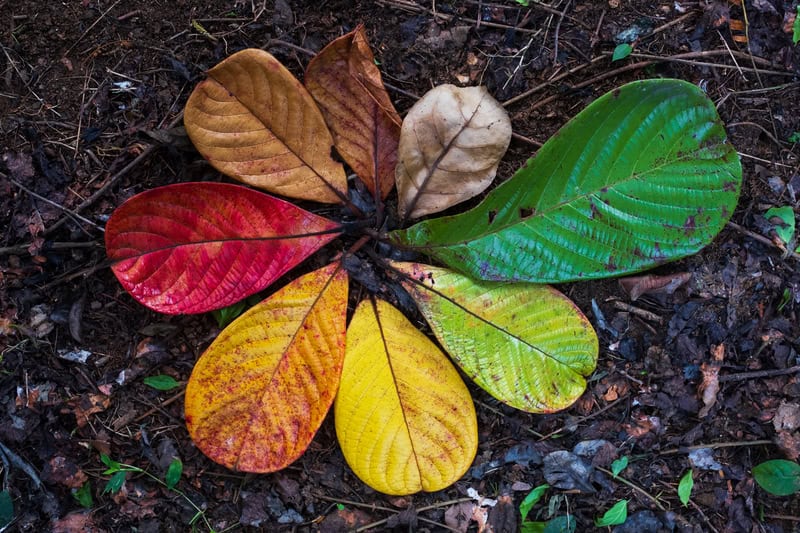
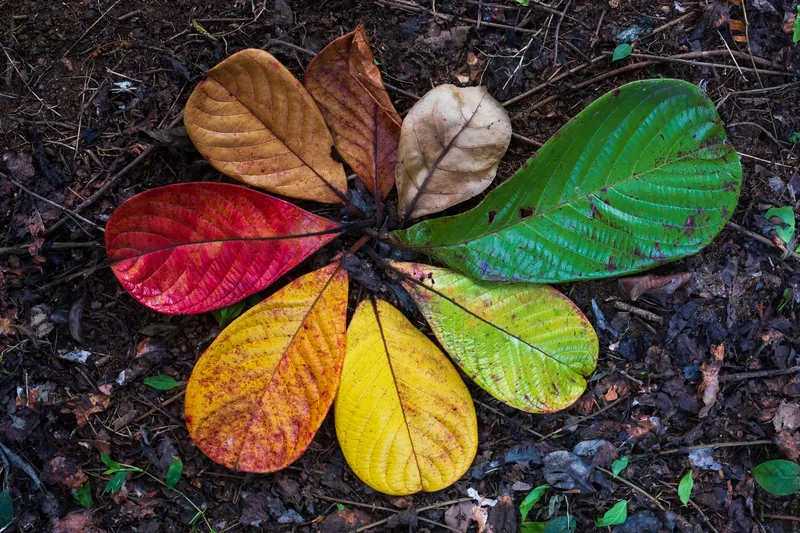
The colour itself is chlorophyll withdrawing and letting the carotenoids underneath show through — which is why you always get the yellows and not always the reds. Reds need warm sunny days and cold-but-not-freezing nights; a hard frost ends the show early, and a warm wet autumn gives you a muddy year. That is why the same overlook looks different to you every October.
One practical consequence: shoot the trip in the first three days you arrive. People save the big location for the last morning and lose it to a windstorm. Wind and rain strip a peak canopy in a single night.
⭐ Quick Picks: If you buy one thing, a circular polariser. If you shoot one place, the Kancamagus in the second week of October. And if you get a grey, drizzly day, do not write it off — go straight to a forest interior, where flat light is the only light that works.
The Kit That Actually Matters
You do not need a new body. You need three cheap things and a way to keep them dry.
🔴 Circular polarising filter — the single highest-value item on this list. Cuts leaf glare and deepens the sky. Turn it OFF for reflection shots, or you will erase the reflection you came for.
🌫️ Variable ND filter — lets you drag the shutter on waterfalls and streams in daylight. Autumn water shots live or die on this.
🎒 Padded camera backpack — top and side access, so you are not putting the bag down in wet leaves every time you change lens.
💾 Fast SDXC card — bracketing three frames per composition fills a slow card and then makes you wait at exactly the wrong moment.
☔ Camera rain sleeve — the best forest light of the whole trip is during light rain. Two-pack, because you will leave one in a hire car.
🧽 Lens cleaning kit — mist, spray and wet leaves put water on the front element constantly. A dirty filter looks exactly like soft focus.
A tripod is the one thing worth your money — every dawn reflection and every misty river shot on this page is a tripod shot. Our New England fall foliage guide has the compact one we actually travel with.
Settings That Hold Up
Light first, everything else second
Front light — sun behind you — makes autumn look like a postcard rack. Backlight and side light are where the trip is. Put the low sun behind the canopy and leaves stop being objects and start being stained glass. Expose for the leaves and let the sky blow out; you are not shooting the sky.
Overcast is not a wasted day. Flat light is the only light that works inside a forest, because it kills the contrast that otherwise makes woodland shots a mess of hotspots. Save your interiors for the grey mornings and your overlooks for the clear ones.


The numbers
📐 Aperture: f/8 to f/11 for landscapes, f/2.8 for single-leaf detail. Past f/16 diffraction softens everything and you gain nothing.
🎞️ ISO: stay at 100–200 on a tripod. Handheld in forest, 400–800 is fine on any camera made in the last decade — noise will hurt you less than motion blur.
🌡️ White balance: set it to Cloudy even in sun. Auto white balance sees all that orange and tries to neutralise it, which is precisely the opposite of what you want.
📸 Format: shoot RAW. Autumn has the widest tonal range of any season and JPEG throws away the exact reds you will want to recover.
🎯 Focus: single-point AF, focus a third into the scene. Continuous AF hunts badly on a moving canopy.
🐧 BuKoo Tip: Bracket everything. Three frames at −1, 0 and +1 costs you nothing and saves the shot when the sun edges out from behind a cloud mid-exposure. On a dawn reflection you will nearly always end up using the darker one.
Five Compositions That Do the Work
🍁 Reflection, no horizon. Find still water, get your camera low, and fill the frame with the reflection alone. Nobody can tell which way is up and everybody looks twice.
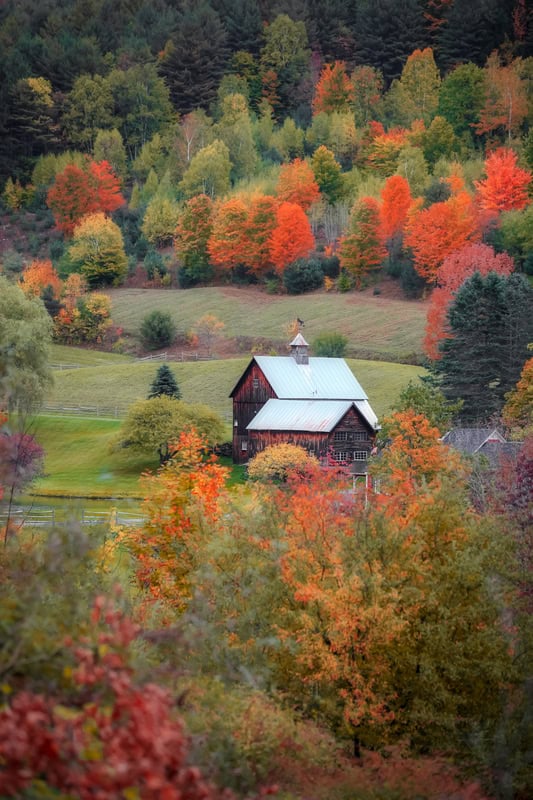
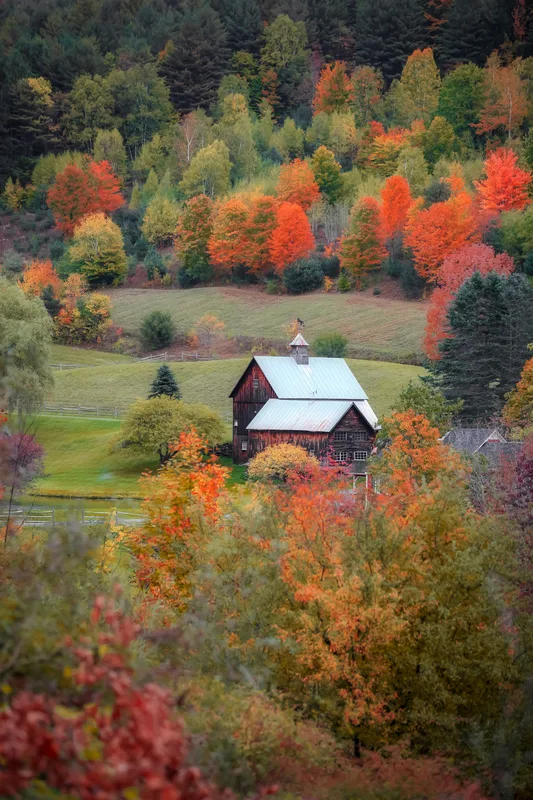
🌉 Something man-made, small. A covered bridge, a white steeple, a red barn, one car on a road. Your colour needs a sense of scale, and a human object gives it one instantly.
🛣️ The road as a leading line. Stand in the middle of it (safely), shoot long, and let the road pull the eye into the colour. This is the Kancamagus shot, and it will work for you anywhere.
⛰️ Layers. From an overlook, use a longer lens to compress ridge behind ridge behind ridge. Wide angles make big views look small — it is the most common mistake you will see on the Blue Ridge Parkway.
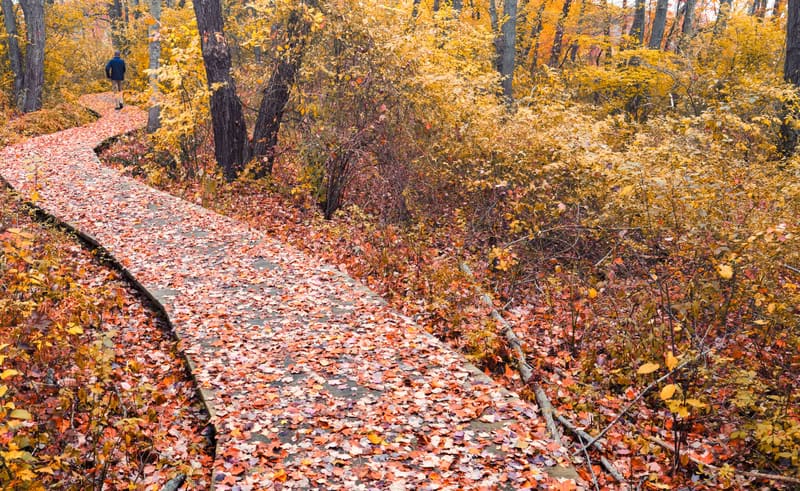
🍂 Look down. Wet leaves on dark rock, a single maple leaf on a car bonnet, leaves in a stream. The best frame of most autumn trips is at your feet and takes four seconds.
Where to Point It
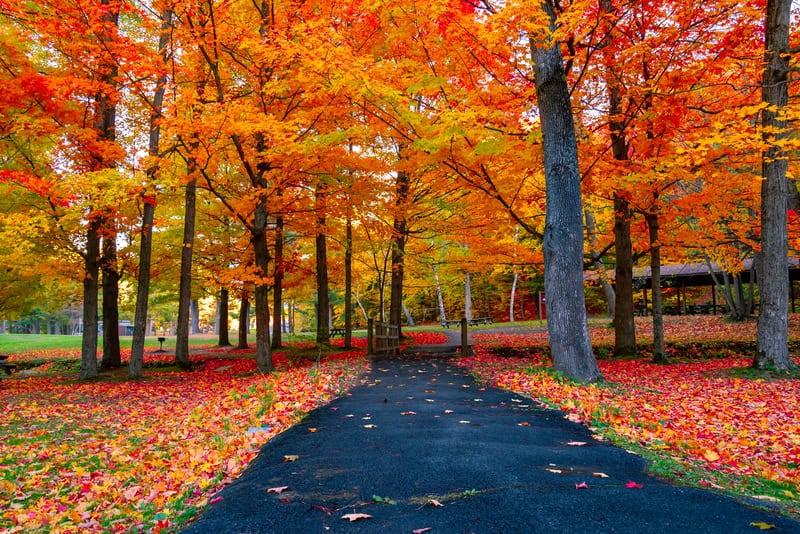
🇺🇸 The Kancamagus Highway, New Hampshire. The highest density of colour per mile in North America, and the pull-offs face the right way in the afternoon. The self-guided audio drive tells you which overlook is coming so you are not braking blind.
🦞 Acadia National Park, Maine. Colour meeting granite and ocean, which almost nowhere else offers you. The Thunder Hole and Acadia driving tour handles the parking problem, which in October is genuinely the hardest part of shooting there.
🏙️ Boston and the Berkshires, Massachusetts. Colour without a hire car. The Boston fall foliage day tour takes you into the White Mountains and back in a day.
🏔️ Banff and Lake Louise, Canada. Golden larches against glacier blue for two weeks at the end of September. The Lake Louise and Moraine Lake photo tour gets you to Moraine at first light, which is now the only realistic way in.
🍁 Mount Takao, Japan. A completely different palette — momiji maples going scarlet in mid-November, weeks after North America is bare. The Mt Takao and Showa Kinen Park autumn tour is an easy day from Tokyo and the last autumn light you will get all year.
Rain, Cold and Keeping the Gear Alive
The best autumn light happens in weather you would rather not stand in. Light rain saturates bark and leaf, mist separates the ridges, and the hour after a storm clears is the best hour of your trip. Go out in it — just protect the kit.
Two rules that will save your camera: never take a cold one straight into a warm car or lodge — condensation forms inside the lens and takes hours to clear, so bag it sealed and let it warm up slowly. And carry your spare batteries against your body; a battery at 2°C reports half the charge it actually has.
One thing worth saying plainly: stay on the trail and off the private land. Half the classic New England shots are of working farms, and access gets closed every year because photographers walked into someone’s field for a better angle. Shoot from the road.
Estimated Costs
A four-day shooting trip | Budget | Mid-range | Splurge |
|---|---|---|---|
Room per night | $95 – 130 | $160 – 240 | $350+ |
Car hire per day | $45 – 60 | $70 – 95 | $120+ |
Guided location tour | $60 – 90 | $120 – 200 | $300+ |
Park entry (weekly pass) | $35 | $35 | $35 |
Food per day | $40 | $75 | $140+ |
The one worth paying for is a guided location tour on your first morning — not for the photography instruction, but because someone who shoots the place weekly knows which overlook has turned. Compare hire rates early; dawn shoots mean you cannot rely on tour timetables.
Fall Foliage Photography: Your Questions Answered
What camera settings are best for fall foliage?
Start at f/8–f/11, ISO 100–200 on a tripod, white balance on Cloudy, shooting RAW. Drop to f/2.8 for single-leaf detail and push ISO to 400–800 handheld in forest. Bracket three frames on anything you care about.
Do I need a polarising filter for autumn photos?
More than you need almost anything else. Autumn leaves have a waxy surface that throws white glare straight back at the sensor, and a circular polariser removes it — the saturation people try to add in editing is mostly just that glare taken away. The exception is reflection shots, where you want the polariser turned off.
What time of day is best for photographing fall colour?
The hour after sunrise and the hour before sunset, with the sun low and behind or beside the leaves. Overcast days are ideal for forest interiors and waterfalls, and the twenty minutes before sunrise is when you get river mist. Midday sun is the only light that will genuinely let you down.
Can I get good autumn photos on a phone?
Yes, with two caveats. Phones handle backlight badly, so tap to expose for the leaves rather than the sky, and turn off any auto-enhance already boosting your saturation. A clip-on polariser costs very little and does the same job it does on a camera. What your phone cannot do is compress ridge layers — that needs a real telephoto.
How do I find peak colour before I book?
Use the state and park foliage reports rather than national maps — New Hampshire, Vermont and Algonquin all publish weekly updates from people who are physically looking at the trees. Book flexible accommodation and be willing to drive an hour to where the colour actually is.
Is it worth shooting in the rain?
It is the single most under-used condition in autumn. Wet bark goes near-black, wet leaves saturate, and the flat light lets you shoot inside forests that are unphotographable in sun. Carry a rain sleeve, keep a cloth on the front element, and go out.
Keep Exploring
🍂 Plan the wider trip: Fall Travel 2026 — ten autumn trips worldwide
🍁 Where to shoot: East Coast foliage road trip · New England fall foliage · Canada fall road trips · Vermont
🍃 The original technique guide: our full fall foliage photography walkthrough
🐢 Elsewhere with BuKoo: Greek island hopping · Panorama Route · Okavango Delta safari